
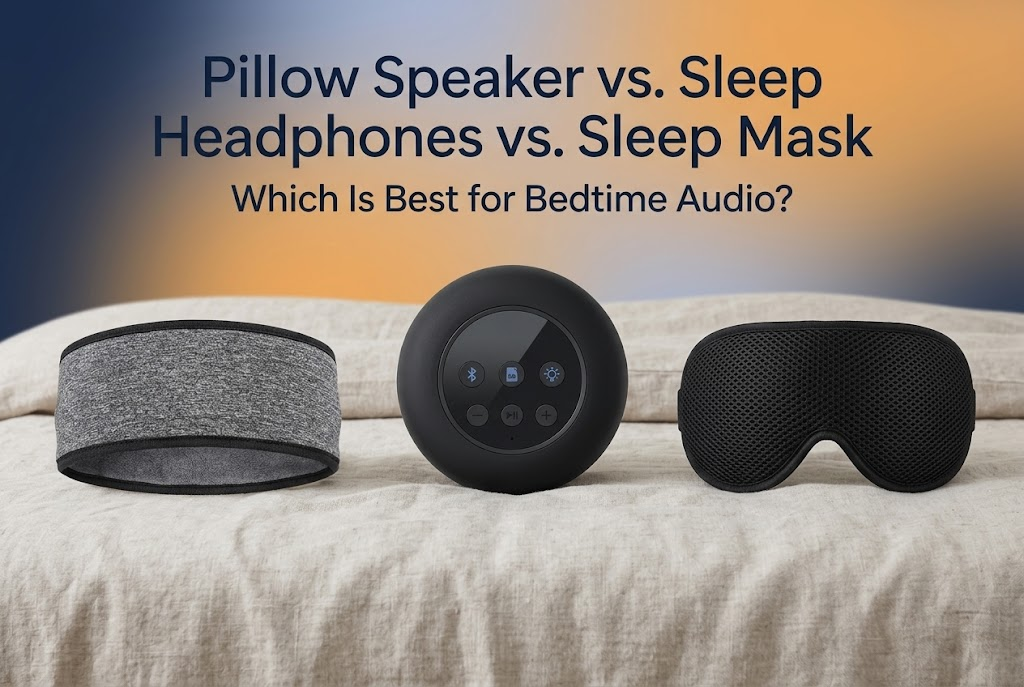
Many people like falling asleep to audio. Regular earbuds make that hard. They press on your ear and fall out overnight. Three products solve this problem in different ways. This guide compares the pillow speaker vs sleep headphones choice, and adds the Bluetooth sleep mask as a third option. You’ll see how each one feels, sounds, and fits different sleepers.
The Three Options at a Glance
Pillow Speaker
A flat speaker sits under or inside your pillow. Nothing touches your ears or head. Sound travels through the pillow, so it stays close and quiet. Some models use bone conduction to send sound through the pillow itself. Our under-pillow speaker guide covers the specs in detail.
Sleep Headphones
These are soft, flat headbands with thin speakers sewn in. The band sits over your ears. Some versions use bone conduction instead of flat speakers. Browse our sleep headphone collection to see the range.
Bluetooth Sleep Mask
This combines a light-blocking mask with thin speakers near your ears. It handles light and sound in one product. Our Bluetooth sleep mask guide explains how it works.
Head-to-Head Comparison
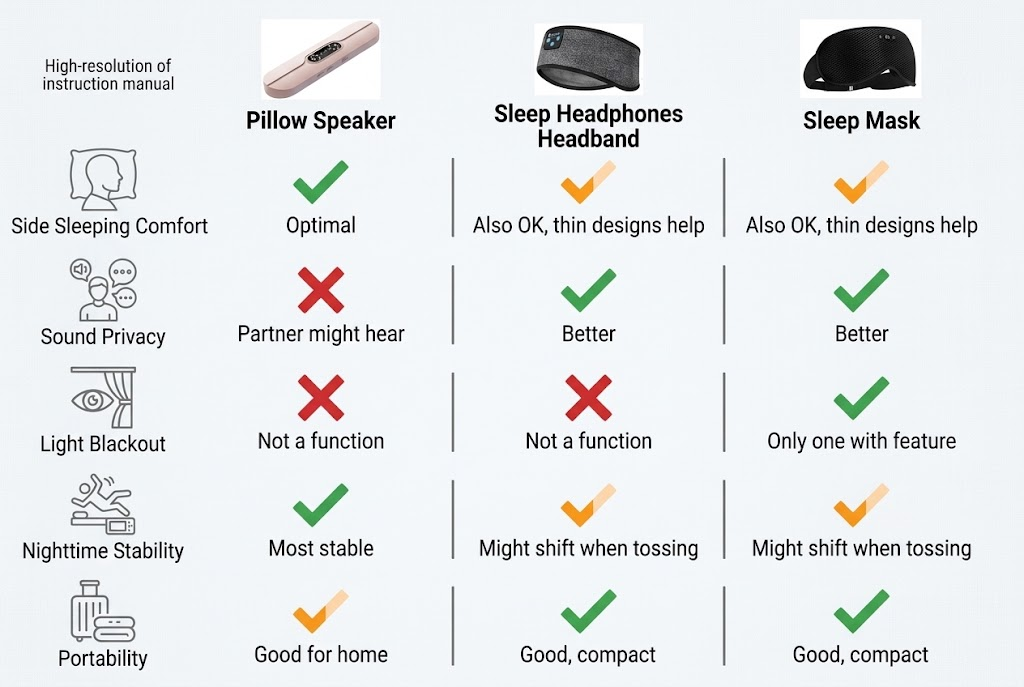
- Comfort for side sleepers: the pillow speaker wins because nothing touches your head. A thin headband or mask also works if it’s low-profile
- Sound privacy: headphones and masks keep audio personal. A pillow speaker is quiet, but a partner in the same bed may still hear it
- Light blocking: only the sleep mask blocks light. The other two need a separate mask
- Movement overnight: a pillow speaker stays put. A band or mask can shift if you toss and turn
- Portability: masks and headbands pack easily for travel. A pillow speaker is best for home use
Which One Fits Which Sleeper?
- Side sleepers often prefer a pillow speaker or a low-profile headband
- Light sleepers who wake at any glow do best with a Bluetooth sleep mask
- Couples may prefer headphones or a mask, so the audio stays private
- Frequent travelers usually pick a mask or headband for packability
Safe Listening Overnight
Volume matters more than the product type. Keep the volume low enough to talk over comfortably. The National Institute on Deafness and Other Communication Disorders explains that long exposure to loud sound can damage hearing over time. Use a sleep timer on all three options. Our guide on calming music for anxiety and sleep covers what to play and how to build a bedtime routine.
For B2B Buyers: Which Category to Add First
Retailers often ask which product to stock first. The answer depends on your customers.
Start With What You Already Sell
A store with sleep masks can add a Bluetooth mask with little extra explanation. A wellness retailer may start with a pillow speaker, since it has fewer comfort objections. Review certifications for each: CE, FCC, and RoHS documents for the exact SKU. For Bluetooth models, also confirm the chipset on the official Bluetooth SIG listing.
Plan a Combined Range
Many buyers eventually carry all three. Each fits a different sleeper, so one range covers more customers. Our sleep routine bundle sourcing guide covers how to combine them with other products.
Frequently Asked Questions
Is a pillow speaker better than sleep headphones?
It depends on the sleeper. A pillow speaker is more comfortable for side sleepers because nothing touches the head. Sleep headphones keep the sound more private.
Can I use a pillow speaker if my partner is asleep next to me?
You can, at low volume. The sound stays close to your pillow. A partner may still hear it faintly, so headphones or a mask suit shared beds better.
Which option is best for light sleepers?
A Bluetooth sleep mask suits light sleepers well. It blocks light and delivers audio together, which removes two common causes of waking.