
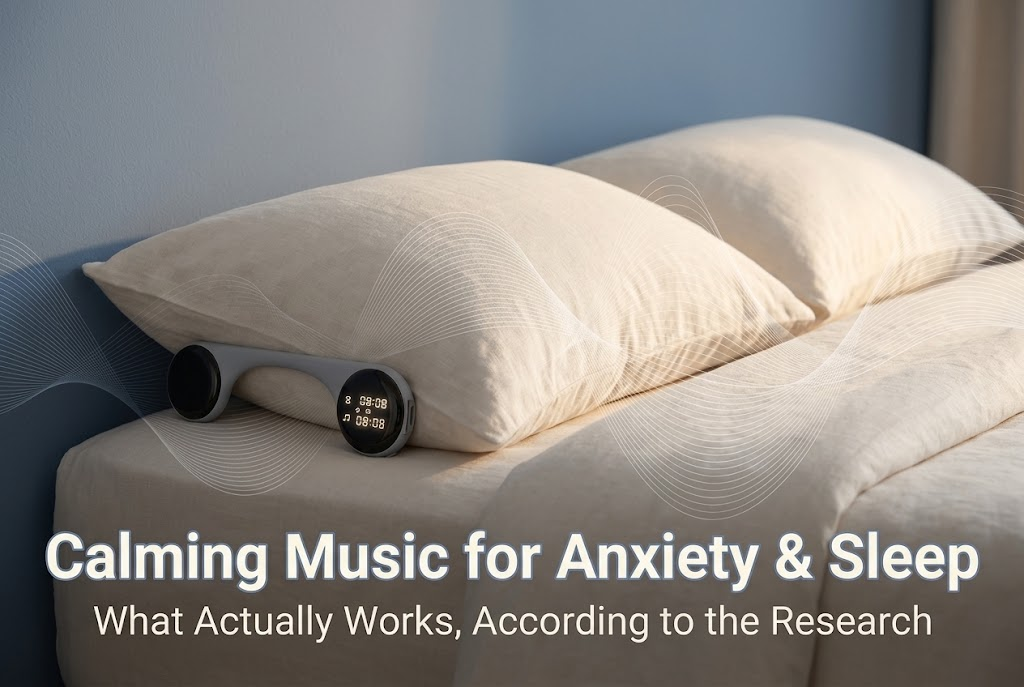
Searching for calming music for anxiety and sleep usually means one thing: your mind won’t slow down at bedtime. Music is one of the most commonly recommended tools for this. Not all music works the same way, though. This guide covers what the research actually says. It covers which types of calming music tend to help most. It also covers how to build a listening routine that doesn’t backfire, plus the audio specs worth checking in a dedicated bedtime speaker.
This article covers general wellness information, not medical advice. If anxiety or sleep problems persist or affect your daily life, talk to a doctor.
Does Music Actually Help With Anxiety and Sleep? What the Research Says
The evidence leans positive, with some caveats. A review referenced by the National Center for Complementary and Integrative Health looked at 13 studies with over 1,000 adult participants. It found that listening to music was linked to improved reports of sleep quality. That’s meaningful, but it’s also not a guarantee. Music tends to work best as one part of a broader wind-down routine. It’s not a standalone fix for chronic anxiety or insomnia.
What Makes Music “Calming” in the First Place
Tempo and Rhythm
Slower tempos tend to feel calming. Most fall in the range of 60 to 80 beats per minute, close to a relaxed resting heart rate. Fast or unpredictable rhythms can have the opposite effect, even if the melody itself sounds pleasant.
Predictability Over Melody
Music with fewer sudden changes in volume or intensity is easier for your nervous system to settle into. Ambient and instrumental tracks tend to outperform songs with vocals or dramatic builds for this reason, especially when the goal is winding down.
Volume and Consistency
Steady, moderate volume works better than anything that swells or drops sharply. A track that suddenly gets louder can pull you right back out of a relaxed state.
Best Types of Calming Music for Anxiety and Sleep
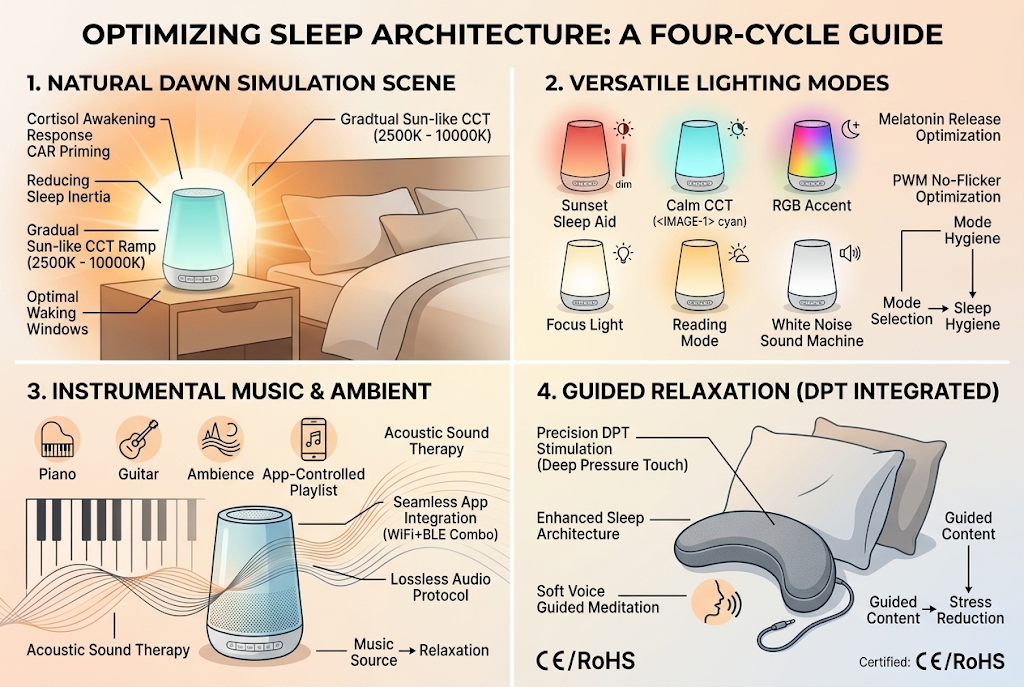
Nature Sounds and White Noise
Rain, ocean waves, and steady white noise mask sudden background noises that would otherwise interrupt sleep. Our white noise machine collection covers dedicated devices built specifically around this use case.
Instrumental and Ambient Music
Piano, strings, or ambient synth tracks without lyrics tend to work well. There’s no language for your brain to actively process while you’re trying to disengage, which helps.
Binaural Beats and Low-Frequency Tones
These use slightly different frequencies in each ear to create a perceived low-frequency beat. Evidence here is more limited than for general music listening, but many people find the steady, droning quality genuinely relaxing.
Guided Relaxation With Soft Background Music
Combining a calm spoken voice with quiet background music adds a structured focus point. This can help pull attention away from anxious thoughts more effectively than music alone.
How to Build a Calming Music Routine Before Bed
- Start 20 to 30 minutes before your target sleep time, not right as you’re trying to fall asleep
- Pick one playlist or sound and stick with it, since your brain starts associating that specific audio with winding down
- Keep the volume low enough to speak over, as a rough gauge for appropriate bedtime volume
- Set a sleep timer rather than letting music play all night, unless you’re using it specifically to mask ongoing noise
Audio Specs Worth Checking in a Dedicated Bedtime Speaker
Maybe you’re moving beyond a phone speaker to a dedicated device. A few technical details separate a genuinely comfortable overnight speaker from one that just looks like it belongs on a nightstand.
- Frequency response tuned for voice and ambient sound, typically in the 100Hz to 15kHz range, rather than a full-range speaker built for music production
- Bluetooth 5.0 or higher for a stable, low-energy connection that won’t drop out or drain your phone battery overnight
- 8+ hours of battery life on a single charge, enough to cover a full night without needing to plug in mid-sleep
- Volume limiters and auto-shutoff timers, which protect hearing and preserve battery life across unattended overnight use
- Low electromagnetic interference, especially relevant for any speaker placed close to your head for hours at a time
The Right Way to Listen to Music Overnight
How you listen matters as much as what you listen to. Standard earbuds can cause ear discomfort during side sleeping. They also carry some risk if worn all night. An under-pillow speaker delivers audio without anything in or over your ears. That makes it a more comfortable option for full-night use. It typically uses bone conduction or a flat-panel transducer to send sound through the pillow rather than through the air. If you also want to move around during the night without a cord, a bone conduction sleep speaker offers a similar open-ear benefit. It comes in a wearable format instead. Our sleep aid machine collection covers dedicated devices built around all-night audio use specifically.
For B2B Buyers: What to Verify Before Sourcing Sleep-Audio Devices
Retailers and private-label brands adding a calming-audio product to their lineup should treat supplier evaluation carefully. It deserves the same scrutiny as any other sleep-tech electronic.
Supplier Track Record
Prioritize manufacturers with proven experience in audio or wellness electronics specifically. Five or more years in business is a reasonable stability signal. A high buyer repeat-order rate suggests consistent quality across production runs, not just a strong first sample.
Certifications and Safety Features
Confirm CE, FCC, and RoHS documentation for the exact model you’re ordering. Beyond certification paperwork, check that the device includes volume-limiting technology and an auto-shutoff timer as standard features, not an optional upgrade. Both matter more for a product used unattended for hours every night.
Customization and MOQ
Confirm the supplier’s capability for bulk orders and custom branding, including logo printing, packaging design, and retail box branding. Ask for tiered MOQ pricing. This lets you compare a logo-only order against a fully custom design before committing to a full production run.
When Anxiety or Sleep Issues Need More Than Music
Occasional restlessness before bed is normal, and music can genuinely help with that. Persistent anxiety that interferes with daily life is worth discussing with a healthcare provider. So are sleep problems that don’t improve with consistent habits. Music-based relaxation works best as a supporting habit. It isn’t a replacement for appropriate care when anxiety or insomnia become more serious.
Frequently Asked Questions
What BPM is best for calming music for sleep?
Most calming tracks fall between 60 and 80 beats per minute, close to a relaxed resting heart rate. This range tends to feel soothing rather than energizing.
Is it safe to fall asleep with music playing all night?
It’s generally fine for most people. A sleep timer is still a reasonable habit, so audio doesn’t play for hours after you’ve already fallen asleep. Comfortable, open-ear listening devices also reduce the risk of ear discomfort from overnight use.
Does calming music work as well as medication for anxiety?
No, and it isn’t meant to replace it. Music-based relaxation is a supportive habit with modest evidence behind it, not a substitute for clinical treatment when anxiety is more severe or persistent.
What’s the difference between an under-pillow speaker and a bone conduction sleep speaker?
An under-pillow speaker sits beneath or inside the pillow and transmits sound through the pillow material, so nothing touches your body directly. A bone conduction sleep speaker is a wearable band that rests against your cheekbone, which suits people who move around or sleep in different positions throughout the night.