
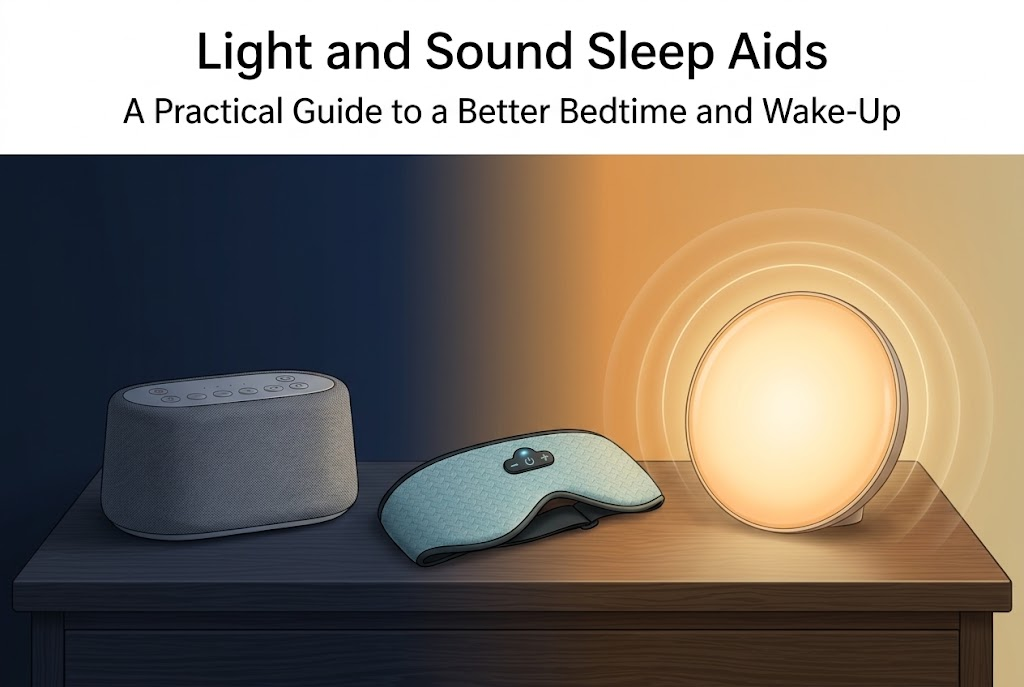
Light and sound shape your sleep more than most people expect. Too much light keeps you awake. Sudden noise pulls you out of deep sleep. Light and sound sleep aids tackle both problems. This guide shows how each type works, how to combine them, and what to look for in each.
This article covers general wellness information, not medical advice. If sleep problems last for weeks, talk to a healthcare provider.
Why Light and Sound Matter for Sleep
Your body clock responds strongly to light. Bright light in the evening can delay sleepiness. Light in the morning helps you wake. Sound works differently. Sudden or uneven noise can cause brief awakenings that you may not even remember. Steady sound tends to hide those spikes.
Sound Sleep Aids
White Noise and Nature Sound Machines
These play a steady sound that masks traffic, doors, and household noise. Look for a wide sound library, a sleep timer, and smooth looping with no obvious gaps. Browse our white noise machine collection to compare models.
Audio Through a Pillow Speaker or Sleep Headphones
Some people prefer sleep stories or calm music. A pillow speaker or soft headband keeps the audio personal and comfortable. Our pillow speaker vs sleep headphones comparison explains which suits which sleeper.
Light Sleep Aids
Blackout Sleep Masks
A mask removes light completely. A 3D design keeps fabric off your eyelids. Our sleep mask guide covers how to choose one.
Sunrise Alarm Clocks
These brighten slowly before your wake time. The gradual change makes waking feel gentler than a sudden alarm. Our sunrise simulation alarm clock guide covers the specs worth checking.
Warm Night Lights
A dim, warm light helps you move around at night without a harsh glare. Amber and red tones are gentler than cool white.
Devices That Combine Light and Sound
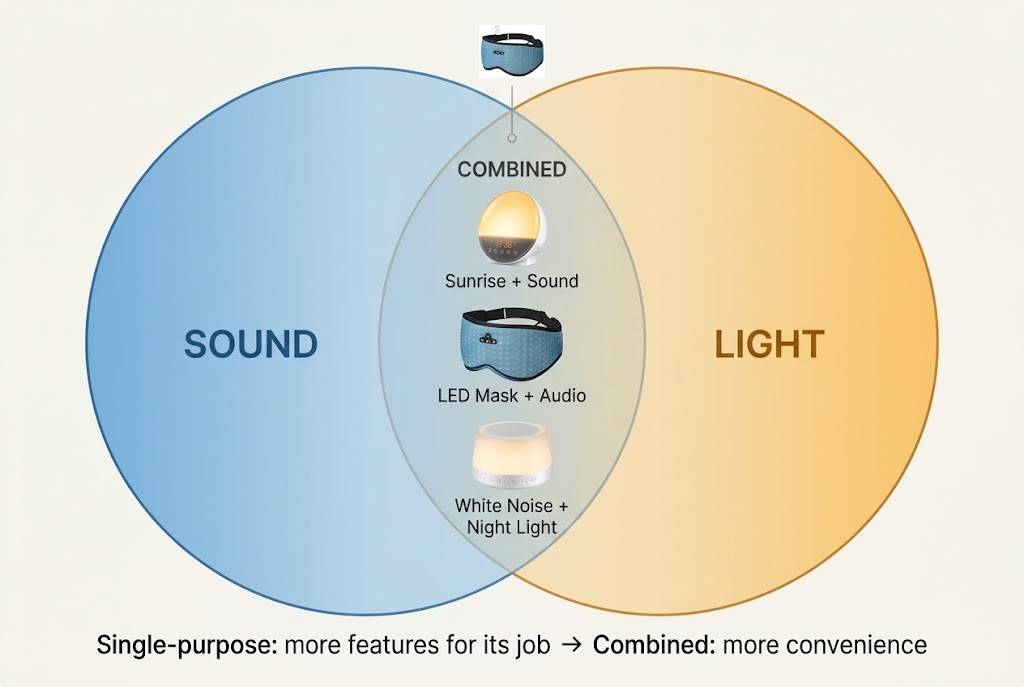 Some products pack both into one device. A sunrise alarm clock often includes a sound machine. An LED sleep mask can add Bluetooth audio and built-in white noise. Combined devices save space and simplify your routine. Our guide to the light therapy sleep mask explains what the LEDs in a mask actually do.
There is a trade-off. A single-purpose device usually offers more features for its job. A combined device offers more convenience. Choose based on your routine, not on the longest feature list.
A Simple Bedtime-to-Morning Routine
- One hour before bed: dim the lights and switch to a warm glow
- At lights-out: start a steady sound and put on a mask if you need darkness
- Overnight: keep the volume low and use a sleep timer
- At wake time: let a sunrise-style light rise before the alarm sound
Our night-to-morning sleep routine bundle guide shows how retailers package these products together.
Keep Sound Levels Safe
Volume matters. Long exposure to loud sound can harm hearing. Keep overnight sound at a low, comfortable level. The National Institute on Deafness and Other Communication Disorders explains how noise exposure affects hearing over time.
Frequently Asked Questions
Do I need both light and sound sleep aids?
Not always. Start with the problem you notice most. If noise wakes you, try a sound machine. If light bothers you, try a mask or blackout curtains.
Is it safe to use a sound machine all night?
For most people, yes, at a low volume. Place the device away from your head and use a timer if you prefer.
Can a sunrise alarm clock replace a normal alarm?
It can for many people. Most models still include a backup sound alarm. Keep it on until you trust the routine.