
You don’t sleep in one flat block. Your brain moves through repeating stages all night. A healthy sleep cycle means those stages run in order, without too many interruptions. This guide explains the stages, how long a cycle lasts, and how many cycles you need. It also shows what tends to break a cycle apart.
This article covers general sleep information, not medical advice. If you struggle to sleep most nights, talk to a healthcare provider.
What Is a Sleep Cycle?
A sleep cycle is one full trip through the stages of sleep. It starts with light sleep. It moves into deep sleep. It ends with REM sleep, when most vivid dreaming happens. Then the pattern starts again.
The Four Stages of a Sleep Cycle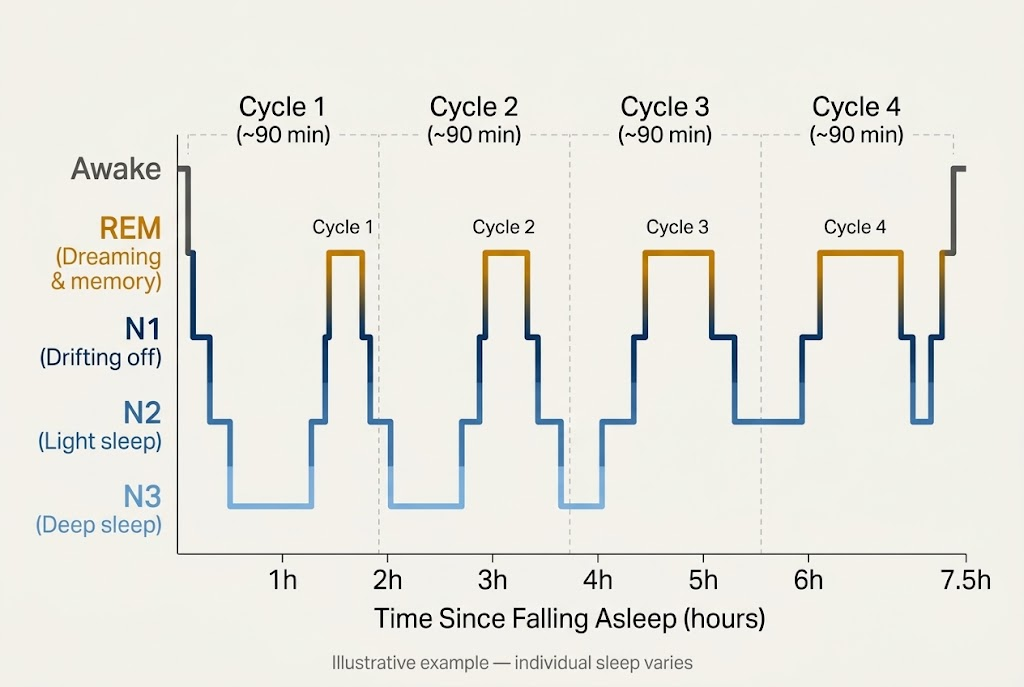
Stage 1 (N1): Drifting Off
This is the lightest stage. It lasts a few minutes. You can wake very easily here.
Stage 2 (N2): Light Sleep
Your heart rate and breathing slow down. Your body temperature drops slightly. Most of your night is spent in this stage.
Stage 3 (N3): Deep Sleep
This is the hardest stage to wake from. Your body does much of its physical recovery here. Deep sleep is more common in the first half of the night.
REM Sleep
Your eyes move under closed lids, and your brain becomes very active. This stage supports memory and learning. REM periods grow longer as the night goes on.
How Long Is a Healthy Sleep Cycle?
The National Heart, Lung, and Blood Institute says a cycle restarts roughly every 80 to 100 minutes. Many sources give a slightly wider range of 90 to 110 minutes. Cycle length varies from person to person, and from one cycle to the next in the same night.
How Many Cycles Do You Need?
Most adults pass through four to six cycles a night. That fits the usual advice of at least seven hours of sleep. Cutting your night short mostly removes the final cycles. Those later cycles hold the longest REM periods. This is one reason short nights can leave you feeling foggy and moody.
What Breaks a Sleep Cycle?
- Noise: sudden sounds can pull you up from deep sleep, even if you don’t remember waking
- Light: a bright room or a glowing screen delays and lightens sleep
- An irregular schedule: shifting bedtimes confuse your body clock
- Alcohol and late caffeine: both can fragment sleep, even when you fall asleep quickly
- A hot bedroom: heat makes it harder to reach and keep deep sleep
How to Protect Your Sleep Cycle
Protecting your cycles mostly means removing interruptions. Keep the same sleep and wake times each day. Our guide on the best sleep pattern for humans explains how to find a schedule that fits your body. Our guide to improving sleep quality naturally covers the habits that keep sleep steady.
A few simple tools can help. A light-blocking sleep mask removes light. A steady sound from a white noise machine masks sudden noises. A sunrise-style alarm wakes you more gently. Our sunrise simulation alarm clock guide explains how those work.
Should You Time Your Alarm to a Cycle?
Some people try to wake at the end of a cycle. The idea is that lighter sleep feels easier to leave. It can help a little. Don’t overdo it, though. Cycle length varies, so exact timing is hard to predict. A consistent wake time matters more.
Frequently Asked Questions
How long is one sleep cycle?
One cycle usually lasts about 80 to 110 minutes. Most adults complete four to six cycles in a night.
Which sleep stage is the most important?
All stages matter. Deep sleep supports physical recovery. REM sleep supports memory and mood. A healthy night has a balance of both.
Do sleep trackers measure sleep cycles accurately?
Consumer trackers give a rough estimate. They are not as accurate as a clinical sleep study. Use them to spot trends, not to judge a single night.