
Why Material Matters More Than You’d Think
You wear a sleep mask against your skin for hours every night. Fabric choice affects temperature, breathability, and how the mask feels against sensitive skin around your eyes. It also affects price and durability. A mask that looks similar in photos can feel completely different once you’re actually wearing it.Silk Sleep Masks
Benefits
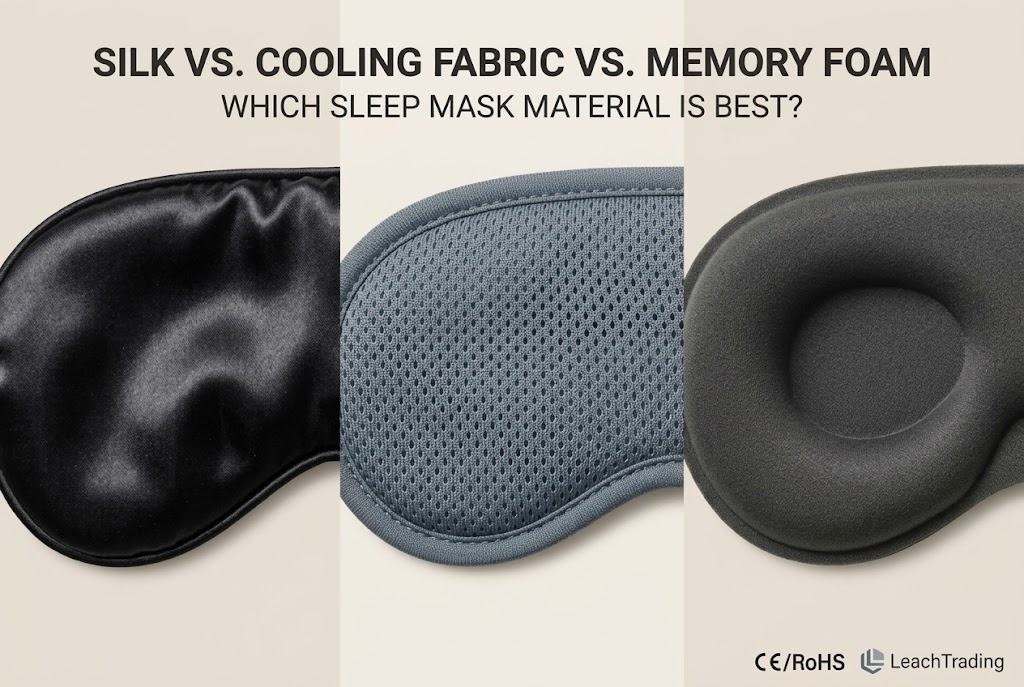
Silk is smooth and naturally hypoallergenic, which makes it gentle against the eye area. It also has a natural temperature-regulating quality, staying cool in summer and slightly warmer in winter compared to synthetic fabrics.Trade-offs
Silk costs more to produce than synthetic alternatives. It also requires gentler washing, since standard machine washing can damage the fibers over time.Cooling Fabric Sleep Masks
Cooling fabric uses a synthetic weave designed to wick moisture and feel cool to the touch. It suits hot sleepers or warmer climates especially well. It’s generally more durable than silk and easier to machine wash without special care. It lacks silk’s natural smoothness against skin, though.Memory Foam Sleep Masks
Memory foam masks add cushioning between your face and the outer fabric layer. This tends to work best in 3D contoured designs, since the foam holds its shape around the eye cavity. It offers the best pressure distribution of the three materials. That matters most for side sleepers, who put more pressure on one side of the mask overnight.Bluetooth Compatibility: Does Material Affect Audio Function?
Material choice doesn’t change how the Bluetooth speaker itself works. It does affect comfort with the added bulk of a speaker module, though. Silk and cooling fabric both work well with flat embedded speakers, since they add minimal thickness. Memory foam pairs naturally with a 3D cavity design, which also has more room to house speaker components. Our Bluetooth sleep mask guide covers the technical specs worth checking, regardless of which fabric you choose.Which Material Fits Which Sleeper?
- Hot sleepers tend to do best with cooling fabric, since it actively wicks heat and moisture
- Side sleepers often prefer memory foam in a 3D contoured design, for the pressure distribution
- Sensitive skin or gift-market buyers tend to favor silk, for both comfort and perceived premium quality
- Frequent travelers often prioritize cooling fabric or silk, since both compress well and dry quickly if washed on the road