
This article covers general sleep science information, not medical advice. If you have a diagnosed sleep disorder, talk to a healthcare provider about your specific schedule.
What Does “Sleep Pattern” Actually Mean?
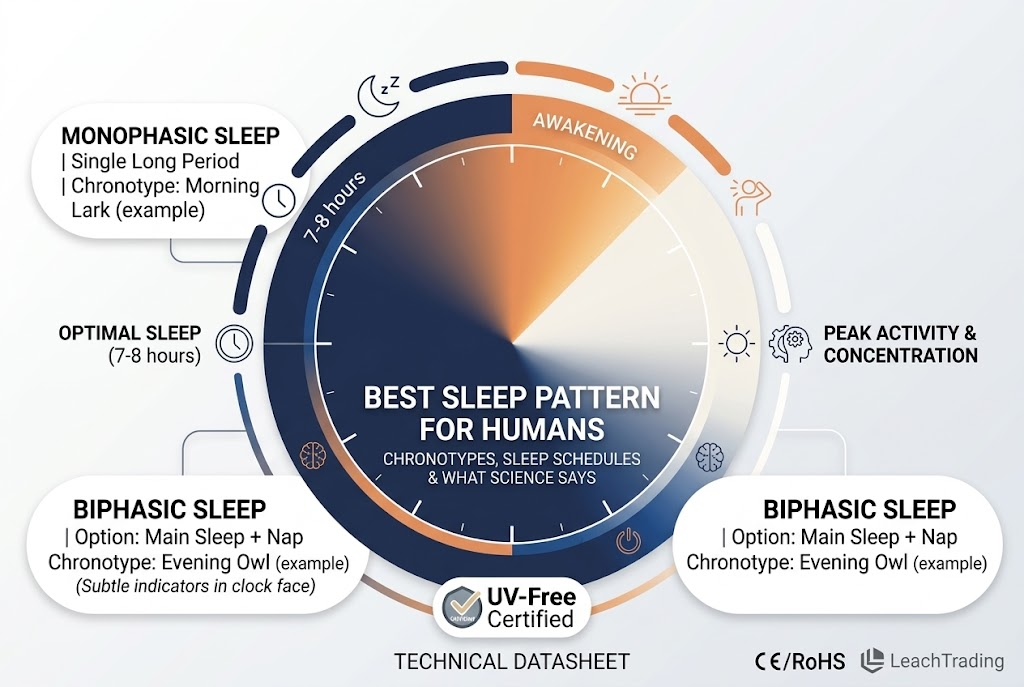
A sleep pattern describes how your sleep is distributed across a 24-hour day. That includes how many separate sleep periods you have and roughly when they fall. It also includes how consistent the timing stays from day to day. It’s a different question from how many total hours you sleep.
Monophasic vs. Biphasic vs. Polyphasic Sleep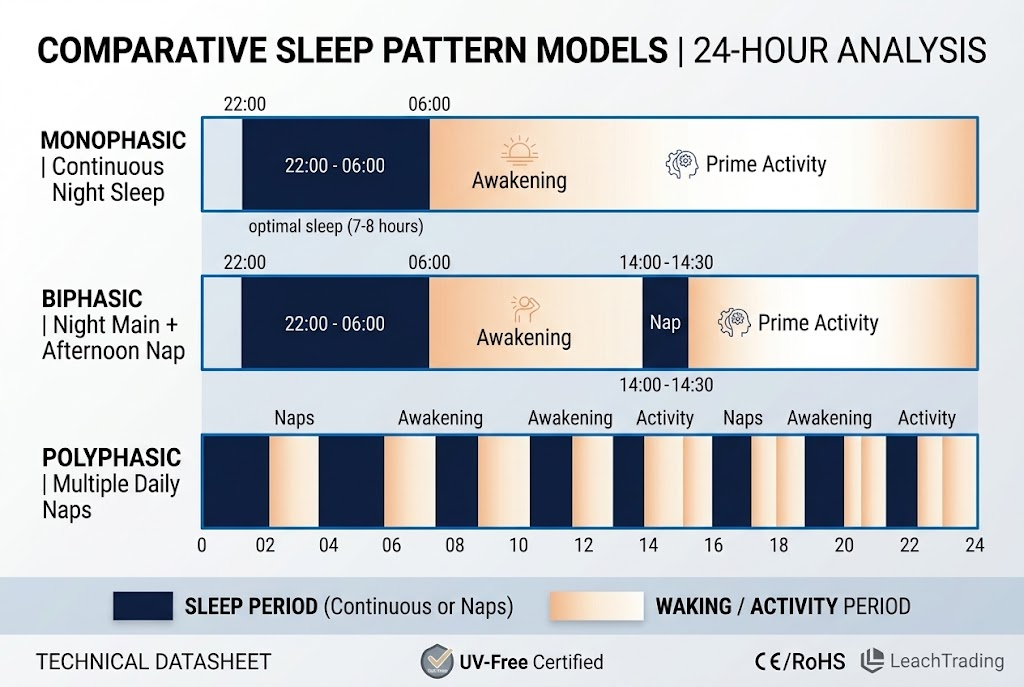
Monophasic Sleep
One consolidated block of sleep, usually at night, is the default pattern for most adults worldwide. It aligns most naturally with a typical work schedule and with the light-dark cycle your body evolved around.
Biphasic Sleep
This splits sleep into two periods, typically a main nighttime block plus a shorter afternoon nap. It’s common in some cultures and among people whose energy naturally dips in the early afternoon.
Polyphasic Sleep
This spreads sleep across three or more short periods throughout the day. It’s popular in some productivity circles. There’s limited evidence that it works well for most people long-term, though. Severely restricted total sleep in these schedules carries real risk to alertness and health.
Chronotypes: Are You a Morning Person or a Night Owl?
Your chronotype is your natural tendency toward morning or evening activity. Genetics play a real role here, alongside age and environment. The National Institute of General Medical Sciences explains that circadian rhythms are internally generated but shaped by external cues like light. That’s part of why chronotype isn’t purely a matter of willpower or discipline. Most people fall somewhere between the extremes of “early bird” and “night owl,” rather than fitting neatly into either category.
Does the “Best” Sleep Pattern Change With Age?
Yes, meaningfully. Chronotype tends to shift later during the teenage years. That’s part of why early school start times are a poor fit for many teens. It gradually shifts earlier again through adulthood. This is why many older adults naturally wake earlier than they did in their twenties. A sleep pattern that felt right at one life stage may not fit as well a decade later.
So What’s Actually the Best Sleep Pattern for Most Adults?
For most adults, a consistent monophasic pattern remains the best-supported default. That means 7 to 9 hours in a single block, at roughly the same time each night. The consistency matters as much as the hours. A pattern that shifts by several hours between weekdays and weekends creates a mismatch similar to mild jet lag, even without any travel involved.
How to Find Your Own Best Sleep Pattern
- Track your natural wake time during a stretch with no alarm, such as a vacation. See where your body settles
- Keep bed and wake times within an hour of each other daily, weekends included
- Notice your energy dips across the day rather than fighting them, since they often reveal your natural chronotype
- Give a new schedule at least two weeks before judging whether it’s working, since your body adjusts gradually
Products That Support a Consistent Sleep Pattern
Whatever pattern fits you best, consistency is easier with the right supporting habits and tools. Our guide to improving sleep quality naturally covers the core habits in depth. A wake-up light or sunrise alarm clock can help anchor a consistent wake time. A light-blocking sleep mask supports the other end of a stable schedule, which is especially useful for shift workers whose sleep window falls during daylight hours.
Frequently Asked Questions
Is polyphasic sleep actually healthy long-term?
Evidence for sustained polyphasic schedules is limited. Many versions involve significantly reduced total sleep, which carries real risks to alertness and health over time. Most sleep researchers don’t recommend it as a general strategy.
Can you change your chronotype from a night owl to a morning person?
You can shift it gradually with consistent light exposure and schedule changes. Genetics set a natural range you’re working within, though. Full reversal from a strong evening type to a strong morning type is uncommon.
Do naps count as part of a healthy sleep pattern?
Short naps can fit well into a biphasic pattern, particularly if they’re brief and don’t fall too close to bedtime. Long or late naps can interfere with nighttime sleep for some people.