
Sleeping eight hours and still waking up tired is a common complaint. The reason usually isn’t the number of hours. It’s the quality of those hours. This guide explains how to improve sleep quality naturally. It starts with how your sleep cycle actually works. Then it covers which everyday habits tend to disrupt it.
This article covers general sleep hygiene information, not medical advice. If sleep problems persist or affect your daily life, talk to a doctor.
What “Sleep Quality” Actually Means
Sleep quality isn’t just total hours in bed. It also depends on how quickly you fall asleep. It depends on how often you wake during the night, too. And it depends on how much time you spend in deeper stages of sleep. Two people can both sleep eight hours and still wake up feeling completely different. One person’s sleep was simply more fragmented than the other’s.
Understanding Your Sleep Cycle
Non-REM vs. REM Sleep
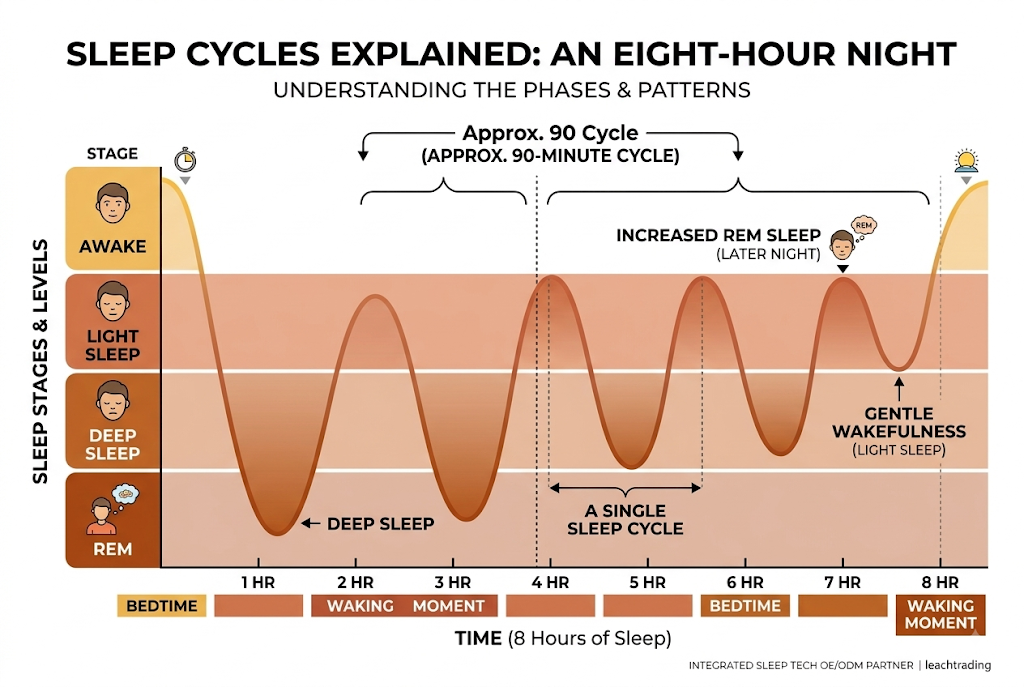
A full sleep cycle moves through several stages, cycling roughly every 90 minutes. Early stages are lighter and easier to wake from. Deeper non-REM stages handle physical restoration. REM sleep comes later in each cycle. It’s where most dreaming happens, and it plays a role in memory and mood regulation.
Why Interruptions Matter More Than Total Hours
Waking up during a deep sleep stage disrupts that cycle. Your body often has to restart part of the process. Frequent light disturbances or noise can leave you feeling tired for this reason, even after a technically full night in bed.
The Biggest Sleep Quality Disruptors
Light
Even small amounts of light can interfere with melatonin production, the hormone that signals your body it’s time to sleep. A streetlight through a thin curtain or a phone screen left face-up can matter more than people expect.
Noise
Sudden or irregular noise disrupts sleep more than steady background sound. Consistent white noise can help mask sharper, more disruptive sounds like traffic or a partner’s movement for this reason.
Temperature and Comfort
A room that’s too warm makes it harder to fall and stay asleep. Most sleep guidance points toward a cool bedroom as more supportive of deeper sleep stages than a warm one.
Screens and Blue Light Before Bed
Screen light in the hour before bed can delay melatonin release and make it harder to fall asleep on schedule. The content matters too — stimulating or stressful content close to bedtime tends to make winding down harder.
Evidence-Based Habits That Support Better Sleep
The CDC points to a consistent set of habits, often called sleep hygiene, as a foundation for better rest. The core habits are straightforward:
- Keep a consistent schedule, going to bed and waking up at the same time daily, weekends included
- Keep the bedroom dark, quiet, and cool, since all three factors affect how easily you stay asleep
- Limit caffeine and alcohol in the hours before bed — both can fragment sleep, even if they help you fall asleep faster
- Get daylight exposure earlier in the day, which helps anchor your circadian rhythm
- Build a wind-down routine before bed instead of going straight from screens to lights-out
How the Right Sleep Products Fit Into a Routine
Products don’t replace good habits, but the right ones remove common obstacles to those habits. A few examples:
- A light-blocking sleep mask addresses the light disruption factor directly, especially useful for shift workers or bright bedrooms. See our sleep mask guide for how to choose one.
- A bone conduction sleep speaker or white noise source helps mask irregular noise without blocking your ear canal overnight. Our bone conduction speaker guide covers how the technology works.
- A wake-up light supports a consistent morning schedule and morning light exposure, both core sleep hygiene habits. Our wake-up light guide breaks down the category by price tier.
Buyers building a full routine around these categories can see how they combine in our night-to-morning sleep routine bundle guide.
How Much Sleep Do Adults Actually Need?
Most adults need at least 7 hours of sleep per night, according to CDC guidance. That number is a floor, not a target to hit exactly. Someone who consistently wakes unrefreshed after 7 hours may need closer to 8 or 9. Total hours only tells part of the story, which is why quality-focused habits matter as much as the number on the clock.
When to Talk to a Doctor
Occasional restless nights are normal. Persistent trouble falling asleep, staying asleep, or feeling rested despite enough time in bed is worth raising with a healthcare provider. These patterns can sometimes point to an underlying sleep disorder that habit changes alone won’t fully resolve.
Frequently Asked Questions
How many sleep cycles do I need per night?
Most adults go through four to six cycles per night, each lasting roughly 90 minutes. This is part of why sleep duration tends to land in multiples close to 7.5 or 9 hours for many people.
Does white noise actually improve sleep quality?
For many people, yes. Steady background sound can mask sudden noises that would otherwise cause a brief awakening, even if you don’t consciously remember waking up.
Can a sleep mask alone fix poor sleep quality?
A sleep mask addresses one variable, light exposure, but sleep quality usually depends on several factors together, including noise, temperature, and schedule consistency. It works best as one part of a broader routine.