
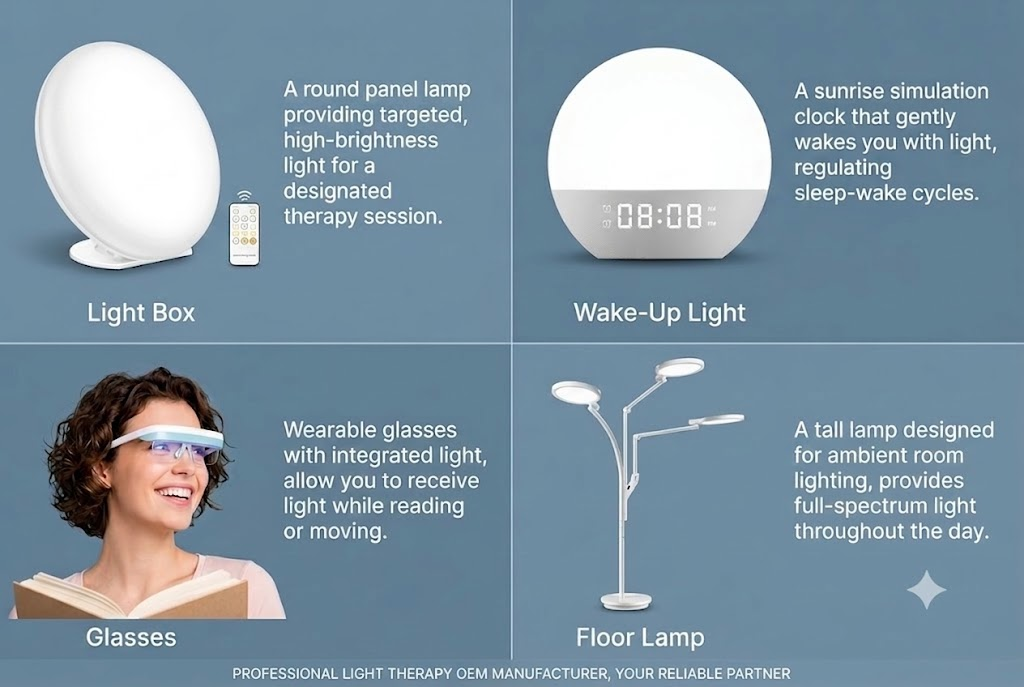
Buying a SAD lamp is the easy part. Using it correctly is where most people fall short. Wrong timing, wrong distance, or the wrong type of lamp for your routine can all reduce how well it works. This guide covers exactly how to use a SAD lamp effectively, plus how to tell the four common lamp types apart before you buy one.
This article is for general information only. It is not medical advice. Talk to a doctor before starting light therapy, especially if you have bipolar disorder or an eye condition.
What Counts as a “SAD Lamp”? Four Common Types
“SAD lamp” gets used as a catch-all term, but the category actually splits into four distinct product types. Each one fits a different daily routine.
Light Therapy Box (Desk Lamp Style)
This is the classic format. It sits on a desk or table and delivers 10,000 lux at a set distance. It works best for people with a consistent morning routine at a desk, since you need to sit near it for a set period each day.
Wake-Up Light / Dawn Simulator
This type sits on a nightstand and gradually brightens before your alarm goes off. It suits people who struggle with a fixed light-therapy session but still want light exposure built into their morning automatically.
Light Therapy Glasses
These deliver light directly near the eyes through a wearable frame. They’re portable and let you move around during use, which some people prefer over sitting still near a desk lamp.
Full-Spectrum Floor Lamp
This format works as ambient room lighting rather than a focused session. It’s a lower-intensity option, often used to supplement, rather than replace, a dedicated light box.
How to Use a SAD Lamp Effectively
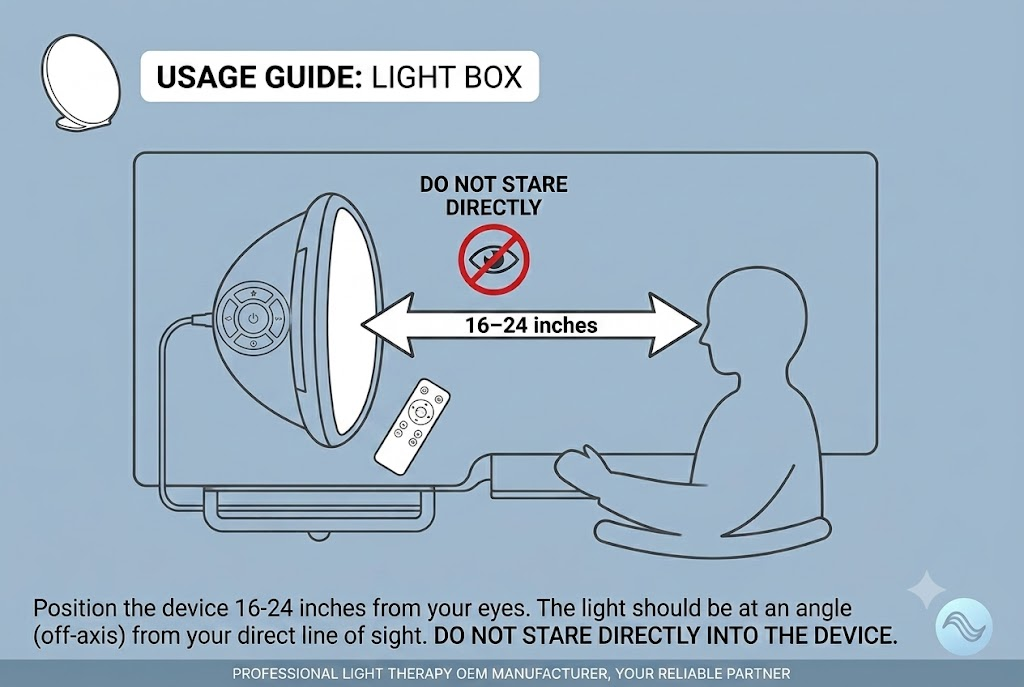
Getting the type right matters, but timing and positioning matter just as much. The Cleveland Clinic outlines the core routine clearly: use the lamp in the morning, sit close enough to get the full effect, and stick with it consistently.
Timing
Morning use works best for most people. Using a light box late in the day can interfere with sleep that night. Try to use it as early as possible after waking, ideally within the first hour.
Distance and Angle
Most 10,000-lux boxes call for a distance of about 16 to 24 inches from your face. Keep the light off to the side rather than directly in your line of sight. You should never stare straight into it.
Duration
Most sessions run 20 to 30 minutes with a 10,000-lux box. A dimmer light may need a longer session to reach a similar effect. Consistency day to day matters more than any single session.
Choosing the Right Type for Your Routine
- If you already sit at a desk each morning, a light therapy box requires the least change to your routine
- If mornings are rushed, a wake-up light builds exposure into your wake-up process automatically
- If you move around during your morning, light therapy glasses offer the most flexibility
- If you want general room brightness rather than a dedicated session, a full-spectrum floor lamp fits as a supplement
Our wake-up light and sunrise alarm clock market guide covers pricing and features across this category if you’re comparing dawn simulator models specifically. If you’re also unsure whether UV light plays any role, our guide on winter depression light therapy and the UV myth covers that question directly.
Common Usage Mistakes
- Using it at night instead of the morning, which can throw off your sleep schedule
- Sitting too far away, which reduces the effective lux reaching your eyes
- Skipping days and expecting the same results as consistent daily use
- Staring directly at the light instead of keeping it off to the side
Safety Considerations Before You Start
- People with bipolar disorder should check with a doctor first, since bright light exposure can affect mood in unexpected ways
- People with eye conditions such as glaucoma, cataracts, or diabetes-related eye damage should get advice from an eye care provider
- Anyone taking medication that increases light sensitivity should confirm light therapy is safe to combine with it
- If irritability or unusual symptoms appear after starting light therapy, stop and talk to a doctor before continuing
Frequently Asked Questions
How long before I notice a difference from using a SAD lamp?
Some people notice a change within a few days of consistent use. For others, it takes closer to two weeks. Sticking with a daily routine matters more than any single session.
Can I read or work while using a light therapy box?
Yes. You can read, eat, or work at your desk during a session, as long as your eyes stay open and the light stays in your peripheral field rather than directly ahead.
Is a wake-up light as effective as a desk-style light therapy box?
They work differently. A wake-up light delivers a gradual, lower-intensity exposure during waking, while a 10,000-lux desk box delivers a stronger, more concentrated dose. Some people use both together.