
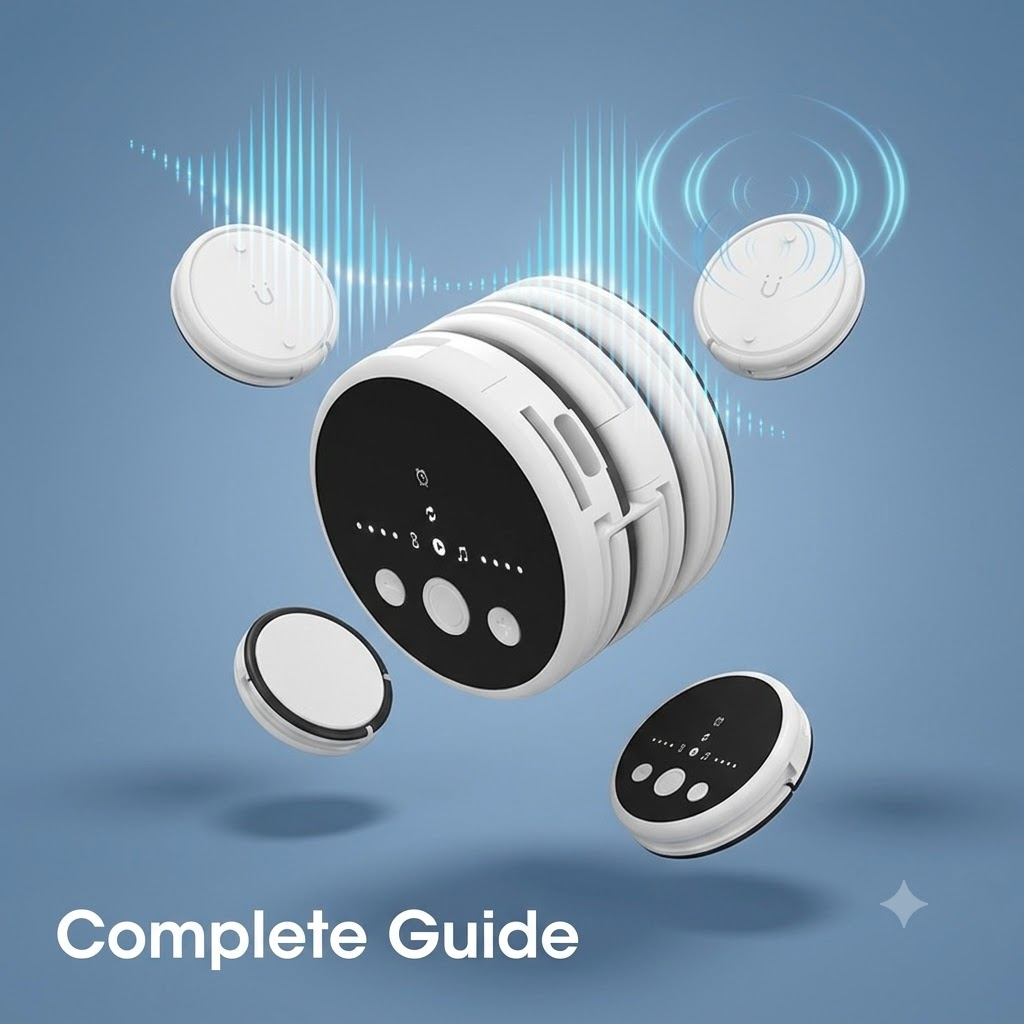
A bone conduction speaker is a small audio device. It sends sound through vibrations against your cheekbone, not through your ear canal. Your ear stays completely open. No plastic component sits inside it or presses against it. That single design choice explains its popularity. Light sleepers, side sleepers, and anyone who finds regular headphones uncomfortable in bed tend to prefer it.
How Bone Conduction Technology Works
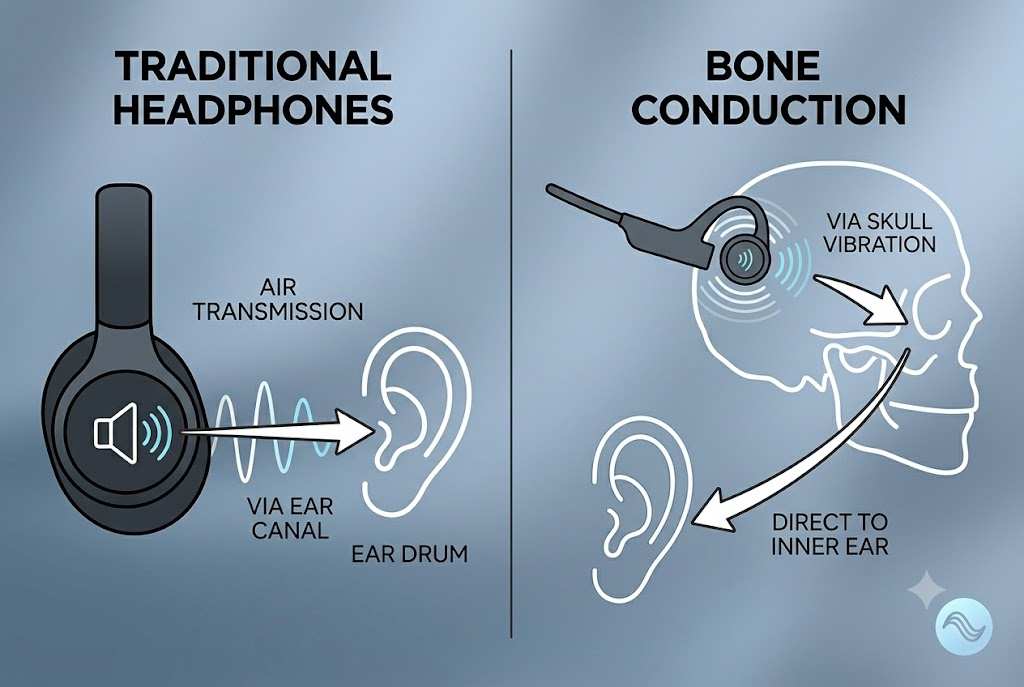
The Science in Plain Terms
Normal headphones send sound waves through the air and into your ear canal. A bone conduction speaker skips that step. It rests against the bone near your ear and vibrates. Those vibrations travel through bone directly to your inner ear. Your brain then processes them as sound. The National Institute on Deafness and Other Communication Disorders explains that hearing depends on a chain of steps. These steps convert sound into electrical signals your brain can interpret. Bone conduction simply reaches that chain through a different physical path.
Why It Feels Different From Regular Headphones
Because nothing sits inside or over the ear, you can still hear ambient sound around you. That’s a feature for some use cases, like running near traffic. For sleep, it means no pressure point builds up overnight. That’s the main complaint driving returns for standard sleep headphones.
Why Light Sleepers Choose Bone Conduction Over Standard Headphones
Light sleepers wake easily. Any physical discomfort, including a headphone pressing into the side of your head, can be enough to interrupt sleep. A flat, low-profile bone conduction band worn along the temple removes that pressure point almost entirely. It also means no earbud can work loose overnight. That’s a smaller but real complaint in this product category.
Bone Conduction vs. Bluetooth Earbuds vs. Sleep Headphone Bands
- Bone conduction speakers: open ear canal, no pressure point, slightly lighter bass response
- In-ear Bluetooth earbuds: fuller sound quality, but the most common source of overnight ear discomfort
- Flat-speaker sleep headphone bands: a middle ground, with speakers embedded in fabric near the ear rather than inside it
Many buyers building a private-label line carry more than one of these formats side by side. Our 3D Bluetooth sleep mask OEM guide covers the flat-speaker approach in detail. It’s worth a look if you want to compare both formats before choosing one.
Supply Chain Management for Sleep Equipment Targeting Light Sleepers
Sourcing bone conduction speakers involves more moving parts than most buyers expect at first glance. Effective supply chain management for equipment targeting light sleepers means planning around a few specific risk points. These risk points don’t apply to simpler products.
Component Sourcing
The driver, the Bluetooth chipset, and the battery each come from different sub-suppliers in most factories. A delay in any one component can hold up an entire production run. Ask your supplier directly which components they manufacture in-house and which they source externally.
Lead Time Planning
A first-time private-label order typically needs 4 to 8 weeks for sample development. Bulk production adds additional time once you approve a sample. Buyers who skip the sample stage to save time often lose more time later. They end up fixing quality issues after a full production run instead.
Quality Control Checkpoints
Because this product combines mechanical, electronic, and comfort-fit elements, a single end-of-line inspection isn’t enough. Strong suppliers check driver output at the component stage. They test battery safety before final assembly. They also confirm comfort fit on a finished sample batch before mass production begins.
Inventory Planning for a Growing Category
Demand for sleep-focused audio products has grown steadily as more retailers add a dedicated sleep-tech section. Buyers entering this category for the first time often underestimate how quickly a well-reviewed SKU can sell through. Plan a reorder buffer into your first production run. Don’t treat it as a one-time test batch.
Certifications and Safety Standards to Verify
Any Bluetooth-enabled bone conduction speaker should be built on a chipset with valid Bluetooth SIG qualification. Buyers can cross-check a supplier’s claimed chipset against the official Bluetooth SIG qualification listing. Beyond that, the same CE, FCC and RoHS documentation required for any wireless electronic device still applies here. Our bone conduction sleep speaker OEM sourcing guide covers this checklist in full. It also lists driver tuning and battery life benchmarks to request from a supplier.
OEM Customization Options for This Category
- Band material and flexibility, since comfort during sleep depends heavily on the silicone hardness and wire core
- Driver tuning for better low-frequency response, which some entry-level units skip entirely
- Firmware features such as an auto-sleep timer or a low-volume night mode
- Logo printing and packaging, available across most MOQ tiers without a major cost increase
Browse current models in our sleep headphone and bone conduction speaker collection. Or see how this product fits into a larger assortment in our night-to-morning sleep routine bundle guide.
Frequently Asked Questions
What is a bone conduction speaker used for besides sleep?
Beyond sleep, people use bone conduction speakers for running and cycling. The open ear canal lets them hear traffic and surroundings. They’re also used by some people with certain types of hearing loss, where sound can bypass parts of the outer or middle ear.
Does bone conduction sound as good as regular headphones?
Bass response is typically lighter, since vibration travels through bone rather than air. For spoken audio, white noise, and ambient sleep sounds, most users don’t notice a meaningful difference.
Why does supply chain planning matter more for this product than for simpler sleep accessories?
This category combines electronics, acoustics, and comfort-fit textiles in one product. Each element depends on a different type of supplier. A delay or quality issue in any single component can affect your entire production timeline.