
Search “best light therapy for winter depression” and you’ll find dozens of roundup lists. Most repeat the same few product names without explaining what actually makes one lamp better than another. This guide skips the rankings. It covers the features that separate a genuinely effective light therapy lamp from one that just looks similar on a shelf.
This article is for general information only. It is not medical advice. Talk to a doctor before starting light therapy, especially if you have bipolar disorder or an eye condition.
What Makes a Light Therapy Lamp “the Best” for Winter Depression?
The best lamp for this purpose isn’t the one with the most reviews or the lowest price. It’s the one that actually delivers a therapeutic light dose without unnecessary risk. The National Alliance on Mental Illness notes that effective light therapy uses an intensity between 2,500 and 10,000 lux. It’s delivered through a diffusing lens that filters out UV radiation. It’s positioned at or above eye level to reduce glare. That’s the actual bar a “best” lamp needs to clear, regardless of brand or price point.
The Must-Have Features Checklist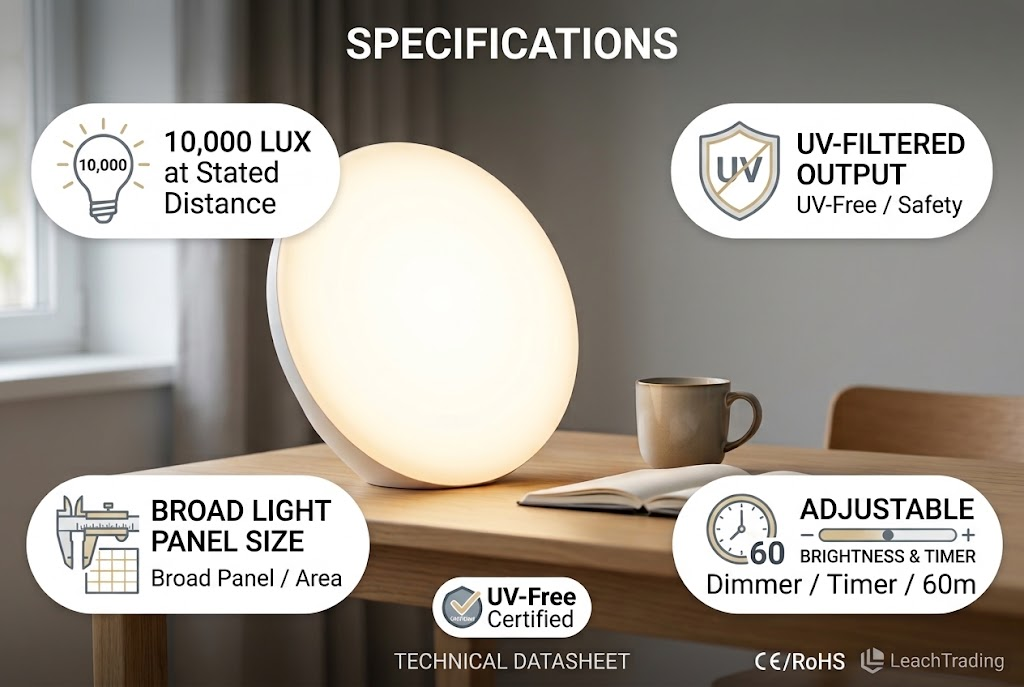
10,000 Lux at a Realistic Distance
Many listings advertise 10,000 lux without stating the distance that figure assumes. A lamp only reaches its rated brightness within a specific range, often under 12 inches. Check the manufacturer’s stated distance, not just the peak lux number on the box.
UV-Filtered Output
A genuine light therapy lamp filters out ultraviolet light rather than adding it. Our winter depression light therapy guide covers this distinction in more depth. It’s the single most common point of confusion in this category.
Broad Light Panel Size
A larger diffusing panel delivers even light across your visual field without requiring you to sit perfectly still. Small panels demand more precise positioning to get the full effect, which makes them less forgiving during a session.
Adjustable Brightness and Timer
A dimmer setting lets you build up exposure gradually if you’re new to light therapy. A built-in timer removes the guesswork around session length.
Best Light Therapy Lamp by Use Case
Instead of naming one universal “best” product, it helps to match the lamp type to how and where you’ll actually use it.
Best for Desk Use
A standard light therapy box with a stand works well if you sit at a desk each morning. Position it slightly above eye level and off to the side, not directly in your line of sight.
Best for Small Spaces or Travel
Compact panel lamps or light therapy glasses suit smaller nightstands or frequent travel. Smaller units may require a longer session to deliver a comparable dose, though.
Best for a Combined Wake-Up and Light Therapy Routine
A wake-up light that reaches full brightness gradually can double as light exposure. This works well if your morning routine doesn’t allow for a dedicated seated session. Our wake-up light market guide breaks down this category by price tier and feature set.
Common Mistakes When Comparing “Best Of” Lists Online
- Trusting a lux number without a stated distance, which makes the figure meaningless on its own
- Assuming a higher price automatically means better performance, when panel size and UV filtering matter more than brand markup
- Overlooking session duration recommendations: a dimmer lamp used briefly won’t deliver the same dose as a properly rated one used correctly
- Ignoring return policies: light therapy response varies by person, and a lamp that doesn’t work for you should be returnable
How to Verify a Manufacturer’s Claims Before Buying or Sourcing
Ask for the lamp’s actual test report showing lux output at a specific distance. Don’t rely on just the number printed on the packaging. For sourcing in bulk, our SAD lamp export compliance guide covers the CE, FCC, and RoHS documentation a legitimate supplier should provide. It also lists the questions to ask before placing a bulk order. Our guide to using a SAD lamp effectively covers the four common product types in more depth, if you’re still deciding which format fits your routine.
Frequently Asked Questions
Is a more expensive light therapy lamp always more effective?
Not necessarily. Price often reflects brand, design, and extra features like app connectivity rather than a meaningfully stronger therapeutic effect. Lux output at a stated distance and UV filtering matter more than price alone.
How do I know if a lamp’s 10,000 lux claim is accurate?
Ask the manufacturer for an independent test report or spec sheet showing lux output at a specific distance. A claim with no stated distance or testing method is harder to verify and worth treating with some skepticism.
Can a smaller, portable light therapy lamp work as well as a full-size one?
It can, but usually requires sitting closer or using it for a longer session to reach a comparable light dose. Smaller panels cover less of your visual field at any given distance.