
If you’ve searched for uv light for winter depression, here’s the short answer first. Most sun lamps for winter depression are built to filter out UV light, not add more of it. That surprises a lot of people. This guide explains what winter depression light therapy actually involves. It covers why UV light is treated as a risk rather than a feature. And it covers what to look for if you’re evaluating a sun lamp for yourself, or sourcing one for your product line.
This article is for general information only. It is not medical advice. Talk to a doctor or mental health provider before starting light therapy. This matters most if you have an eye condition, bipolar disorder, or take medication that increases light sensitivity.
What Is Winter Depression, and Why Does Light Matter?
Seasonal affective disorder, often shortened to SAD, is a form of depression that tends to appear in fall and winter. Shorter daylight hours are the main trigger. Reduced sunlight can disrupt your internal body clock. It can also lower certain brain chemicals linked to mood. The National Institute of Mental Health describes light exposure as one recognized way clinicians address these seasonal mood changes. It’s often used alongside other treatment approaches.
Do Sun Lamps for Winter Depression Use UV Light? The Short Answer Is No
This is the part most searches on “uv light for winter depression” get wrong. Light boxes designed for winter depression are meant to filter out most or all UV light, not deliver it. That’s a safety requirement, not a design preference.
Why UV Filtering Matters
UV light doesn’t meaningfully improve mood. It does carry real risk to your skin and eyes with repeated exposure. Lamps built for skin treatments, such as tanning devices, emit UV light on purpose. Lamps built for winter depression are a different category entirely. Mixing the two up can lead someone to buy the wrong product.
What Kind of Light Actually Helps
Bright white light, not UV light, is the active ingredient in a light-therapy sun lamp. Clinical guidance generally points to 10,000 lux as the target brightness for an effective session. That number matters more than any UV claim on a product label.
How a Light-Therapy Sun Lamp Works
The mechanism is simple once you understand it. You sit near the lamp during a set window each day. Your eyes take in the bright light without staring directly at it.
Recommended Lux Levels
Most guidance points to a light box that reaches 10,000 lux at typical sitting distance. Dimmer lamps can still work, but they usually require a longer session to reach a comparable effect.
Timing and Duration
Morning use tends to work best. A common pattern is 20 to 30 minutes within the first hour after waking. Position the lamp roughly 16 to 24 inches from your face. Using it later in the day can interfere with sleep for some people.
Choosing a Sun Lamp: Features That Matter
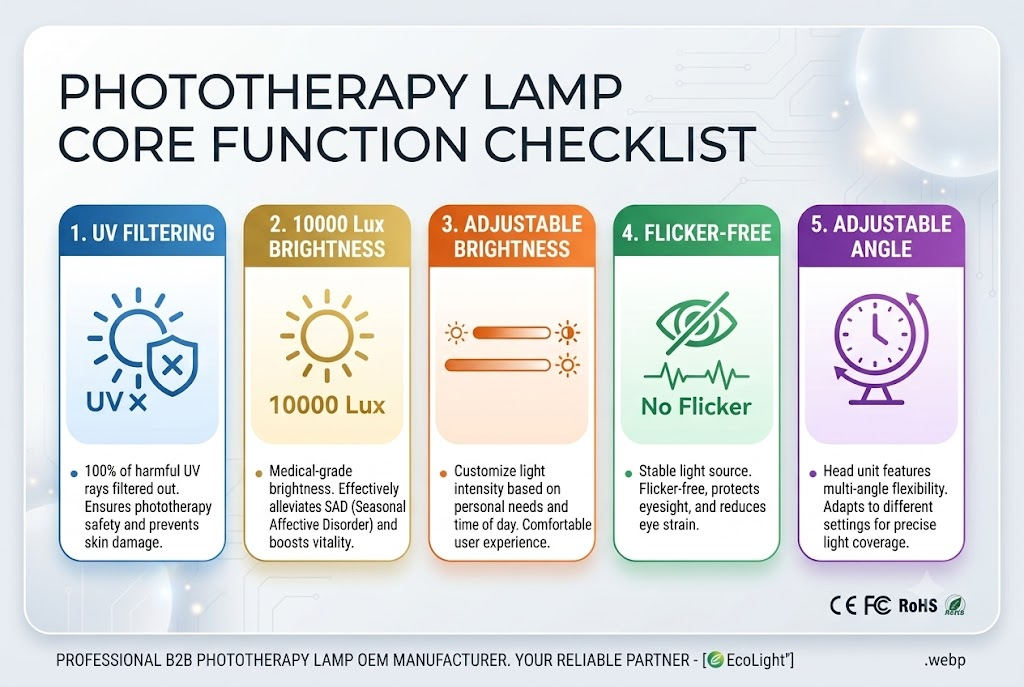
- UV-filtered output — confirm the manufacturer states the lamp filters out most or all UV light
- 10,000 lux rating at a stated, realistic distance, not just a marketing number
- Adjustable brightness for shorter sessions or gradual introduction
- Stable, flicker-free light source to reduce eye strain during use
- Compact, tilting design so it fits naturally on a desk or breakfast table
If you’re comparing full product specs for a purchase or for sourcing, our wake-up light and sunrise alarm clock market guide breaks down price tiers and features across the category. Buyers evaluating export requirements can reference our SAD lamp export compliance guide for CE, FCC and RoHS documentation.
Safety Considerations Before You Start
Light therapy is generally well tolerated, but it isn’t automatically right for everyone. A few groups should check with a doctor first:
- People with bipolar disorder, since bright light exposure can affect mood in unexpected ways
- People with eye conditions such as glaucoma, cataracts, or diabetes-related eye damage
- Anyone taking medication that increases light sensitivity, including certain antibiotics and mood stabilizers
- Anyone whose symptoms feel severe, sudden, or unmanageable — a lamp is not a substitute for professional care
The Mayo Clinic’s guidance on choosing a light box for seasonal affective disorder covers these safety questions in more detail. It’s a useful reference before making a purchase decision.
A Note for Retailers and Private-Label Brands
If you’re sourcing or marketing light-therapy lamps, treat the UV question as a compliance issue, not just a copywriting detail. Overstating therapeutic claims, or failing to disclose UV output accurately, creates real regulatory and reputational risk. Product copy should state lux output and UV filtering clearly. It should avoid language that promises to cure or treat depression outright. Pairing accurate, hedged language with real specs tends to perform better with informed buyers anyway.
Frequently Asked Questions
Is UV light necessary for a sun lamp to help with winter depression?
No. Bright white light at a sufficient lux level is what matters, not UV content. Most lamps built for this purpose are designed to filter UV light out for safety reasons.
How long does it take to notice a difference from light therapy?
Some people report a change within a few days of consistent morning use, though timelines vary by person. Consistency matters more than any single session.
Can I use a regular UV tanning lamp instead of a light-therapy sun lamp?
No. Tanning lamps are built to deliver UV light for skin purposes. That’s the opposite of what a light-therapy lamp is designed to do. Using one in place of the other isn’t a safe substitution.
Pingback: How to Use a SAD Lamp Effectively | Leach Trading