
Nine out of ten first-time importers lose money on their opening OEM order for bluetooth sleep masks. The global market is projected to hit 198.3M by 2034, up from 87.4M in 2025, and MOQs as low as 300 units now make it possible to enter without a six-figure bet. But most of that revenue flows to importers who got the fundamentals right.
You’ve seen the Amazon rankings and the Alibaba listings. What you haven’t seen is the real cost math, the five mistakes that sink first-time sourcing projects, and the specific OEM process experienced importers follow. All three are below, plus a direct path to a low-MOQ, CE/FCC-certified bluetooth sleep mask OEM partner that ships samples in 7–10 days.
Why the Bluetooth Sleep Mask Market Is Booming in 2026
People can’t sleep. Bluetooth chips are cheap. And after three years of pandemic anxiety, consumers actually want to spend on wellness gadgets instead of just scrolling. For importers, the question isn’t whether this market grows. It’s whether you catch the right wave at the right time.
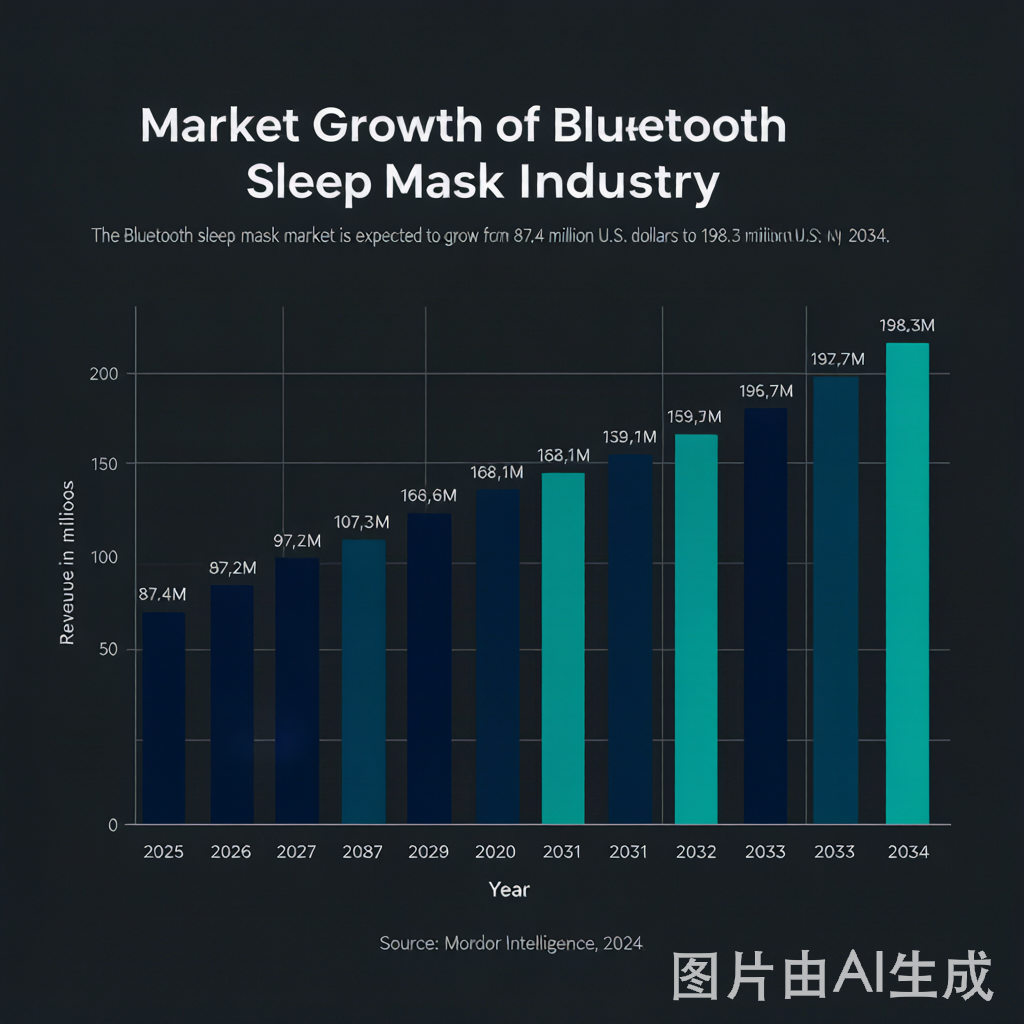
Market Size & Growth Projections
Market research firms differ on exact figures, but the trajectory is unambiguous:
| Source | 2025 Market Size | Projected Size | CAGR |
|---|---|---|---|
| IntelMarketResearch | $87.4M | $198.3M (2034) | ~9.5% |
| FutureDataStats | $350M | $1.8B (2033) | 22.7% |
Why the gap? Different methodologies. IntelMarketResearch focuses narrowly on bluetooth-enabled sleep masks; FutureDataStats casts a wider net including sleep headbands and related audio sleep aids. Either way, the category is expanding at a multiple of general consumer electronics growth.
The broader context matters even more. The global sleep tech devices market, which includes smart mattresses, sleep trackers, sleep speakers, and sunrise alarm clocks, is projected to balloon from 29.3Bin2025to[134.7B by 2034 at an 18.5% CAGR](https://www.gminsights.com/industry-analysis/sleep-tech-devices-market) (GMInsights). Alongside this growth, specialized OEM guides for under pillow speakers and sunrise alarm clocks provide deeper sourcing details for adjacent sleep-tech categories. Bluetooth sleep masks sit at the intersection of audio electronics and sleep wellness, two of the fastest-growing sub-segments.
What this means for importers: You’re not chasing a fad. You’re entering a structural growth category with expanding consumer adoption across age groups and geographies.
Consumer Trends Driving Demand
Three consumer segments are fueling the bluetooth sleep mask boom:
1. Side sleepers seeking comfort. Traditional earbuds and headphones press painfully against the ear when you sleep on your side. Bluetooth sleep masks with ultra-thin, flush-mounted speakers solve this directly. Amazon review analysis shows that 14% of negative feedback on older sleep audio products mentions ear pressure, and 21.8% of positive reviews on bluetooth sleep masks specifically cite comfort (Accio consumer insights, 2025).
2. White noise and audio therapy integration. Consumers increasingly want a single device that blocks light and plays curated sleep content. Bluetooth sleep masks with built-in white noise, featuring preloaded sound libraries, sleep timers, and Bluetooth streaming from apps like Calm or Headspace, are outselling basic audio-only models by a 3:1 margin on major e-commerce platforms.
3. Travel and shift workers. Long-haul travelers, nurses on rotating shifts, and digital nomads represent a growing demographic that needs portable, all-in-one sleep solutions. The travel use case, where a single item replaces earplugs, an eye mask, and headphones, is the fastest-growing application segment according to Accio trend data.
Consider what happened with Musicozy. Founded in 2012, the brand pioneered the bluetooth headband sleep headphone concept. Over a decade, they refined their product through consistent R&D and real user feedback. Today, Musicozy has helped over 10 million users worldwide improve their sleep, and their bluetooth sleep mask ranks as one of Amazon’s best-selling items in the category, praised by publications like Tom’s Guide for succeeding “as an eye mask, blocking out light and staying secure on your face as you sleep.” The brand didn’t start with a massive product line. It started with a single well-executed OEM product that solved a real pain point.
Seasonal Demand Patterns
Google Trends data tells a clear story for importers planning production schedules:
- “Bluetooth sleep mask” search interest hit a normalized value of 83 in September 2025, the highest point in the year (Google Trends / Accio analysis).
- “Bluetooth eye mask” peaked at 39 the same month.
- “Wireless sleep mask”, a newer search term, climbed to 29 by November 2025, indicating expanding category awareness.
The seasonal pattern is consistent: search volume and sales rise sharply from August through November, driven by back-to-school routines and holiday gift-buying. Amazon sales data confirms November as the absolute peak, with headband-style search volumes reaching 3,442.6 and mask-style volumes at 1,644.0.
If you want product available for the Q4 rush, sample approval needs to happen by May–June, and production should be booked by July at the latest. Miss that window, and you’re competing for limited factory capacity during peak season, or arriving after demand has already been served by faster competitors.
What to Look for in a Bluetooth Sleep Mask OEM Partner
Some factories deliver. Others just deliver headaches: misaligned speakers, missing certifications, and containers that sit in customs for weeks. What separates a launch that prints money from one that burns it? Five things. Not ten, not “it depends,” five specific criteria you can evaluate before you sign a purchase order.
A bluetooth sleep mask OEM (Original Equipment Manufacturer) is a factory that produces sleep masks with built-in Bluetooth audio technology under your brand name, handling everything from product design and manufacturing to certification and custom packaging. This allows you to sell the product as your own without operating a factory.
Manufacturing Capabilities
A capable bluetooth sleep mask manufacturer should demonstrate competency across these dimensions:
- Bluetooth version: Bluetooth 5.0 is the current baseline. Bluetooth 5.3 is emerging in newer models, offering improved power efficiency and more stable connections. A factory still producing Bluetooth 4.2 products is behind the curve.
- Speaker design: Ultra-thin speakers (under 4mm thick) are essential for side-sleeper comfort. Some manufacturers offer bone conduction variants that bypass the ear canal entirely, a premium feature commanding higher retail prices.
- Material range: At minimum, the factory should offer 3D contoured memory foam, breathable mesh, natural silk, and cotton options. Silk SKUs retail for 2–3× the price of standard models.
- Battery life: Current market-leading models offer 10–14 hours of playback on a single charge. Some newer models extend this to 20–35 hours. Battery specification directly affects consumer reviews and return rates.
- Production capacity: Verify the factory can handle your projected order volume within your timeline. A 10,000-unit/month factory may not be the right fit if you need 50,000 units in 60 days.
If a factory won’t show you their production line, no photos, no video call, walk away. Legitimate OEM partners expect you to verify. The ones that don’t usually have something to hide.
Certification Requirements
For US and EU market entry, certifications are not optional. They are legal requirements that customs agents and retailers actively verify.
| Certification | Market | What It Covers | Why It Matters |
|---|---|---|---|
| FCC | United States | Electromagnetic interference | Required for all Bluetooth-emitting devices. Products without FCC marking face customs seizure. |
| CE | European Union | Safety, health, environmental protection | Mandatory for EU market entry. Required by Amazon EU, retail chains, and customs. |
| RoHS | European Union | Hazardous substances in electronics | Increasingly required by European retailers. Covers lead, mercury, cadmium, and other restricted materials. |
| REACH | European Union | Chemical safety | Required for textile components (fabrics, dyes). Non-compliance results in product recalls. |
For a detailed breakdown of REACH compliance requirements for textile products, including SVHC thresholds and testing procedures, see QIMA’s comprehensive guide.
Before you place any order, request copies of every certification document. A manufacturer that claims FCC compliance but can’t produce the certificate? They’re either un-certified or borrowing another factory’s credentials. Either way, you’re the one holding the legal liability as the importer of record.
Low MOQ vs High MOQ — What Makes Sense for Your Business
The traditional OEM model demanded 5,000–10,000 unit minimum orders. That’s changing fast.
| Business Type | Recommended Starting MOQ | Rationale |
|---|---|---|
| Amazon FBA seller (new SKU) | 300–500 units | Test market demand before committing capital. One container can carry 5,000+ units, start smaller. |
| Established DTC brand (new market) | 1,000–2,000 units | You have brand equity and a known conversion rate. Scale faster. |
| Gift/corporate buyer (seasonal) | 500–1,000 units | Seasonal demand limits reorder windows. Order what you can sell. |
| Retail chain supplier | 2,000–5,000+ units | Retailers require consistent shelf stock and safety inventory. |
Manufacturers offering 300–500 unit MOQs (like Leach Trading) enable you to validate product-market fit without a six-figure bet. A 500-unit order at 5.50/unitisa2,750 investment, a manageable test. A 5,000-unit order at the same price is $27,500, a much harder decision if the product hasn’t been market-validated.
Low MOQ doesn’t mean low quality. It means the manufacturer has optimized their production setup for flexibility, with smaller batch runs, modular tooling, and efficient changeover processes.
Customization Options
The depth of customization available from your OEM partner directly determines your brand’s differentiation potential:
- Bluetooth sleep mask custom logo printing: Screen printing, embroidery, and debossing are standard. Screen printing is the most cost-effective at 0.10–0.30/unit for simple designs.
- Custom packaging: Retail boxes, gift boxes, and eco-friendly packaging (kraft, recycled cardboard) are all available. Custom packaging typically adds 0.30–0.80/unit depending on complexity and order volume.
- Firmware customization: Some manufacturers can preload custom audio content (white noise, guided meditations), brand the Bluetooth device name (e.g., “YourBrand SleepMask” instead of “BT-5.0”), and customize LED indicator colors.
- Material and color options: Minimum 3–5 color options should be available. Premium materials like 22-momme silk command retail prices 2–3× higher than standard cotton models.
- Full private-label service: Custom user manuals, warranty cards, and branded charging cables transform a generic OEM product into a branded retail item.
Want to see what customization looks like in practice? Explore the bluetooth sleep mask collection to view product variants and specification options, or request a free sample to evaluate quality firsthand.
Bluetooth Sleep Mask Product Types for Your Brand
Choosing the right product type is your most important commercial decision. Each category serves a different consumer segment and carries a different price point, margin profile, and competitive landscape.
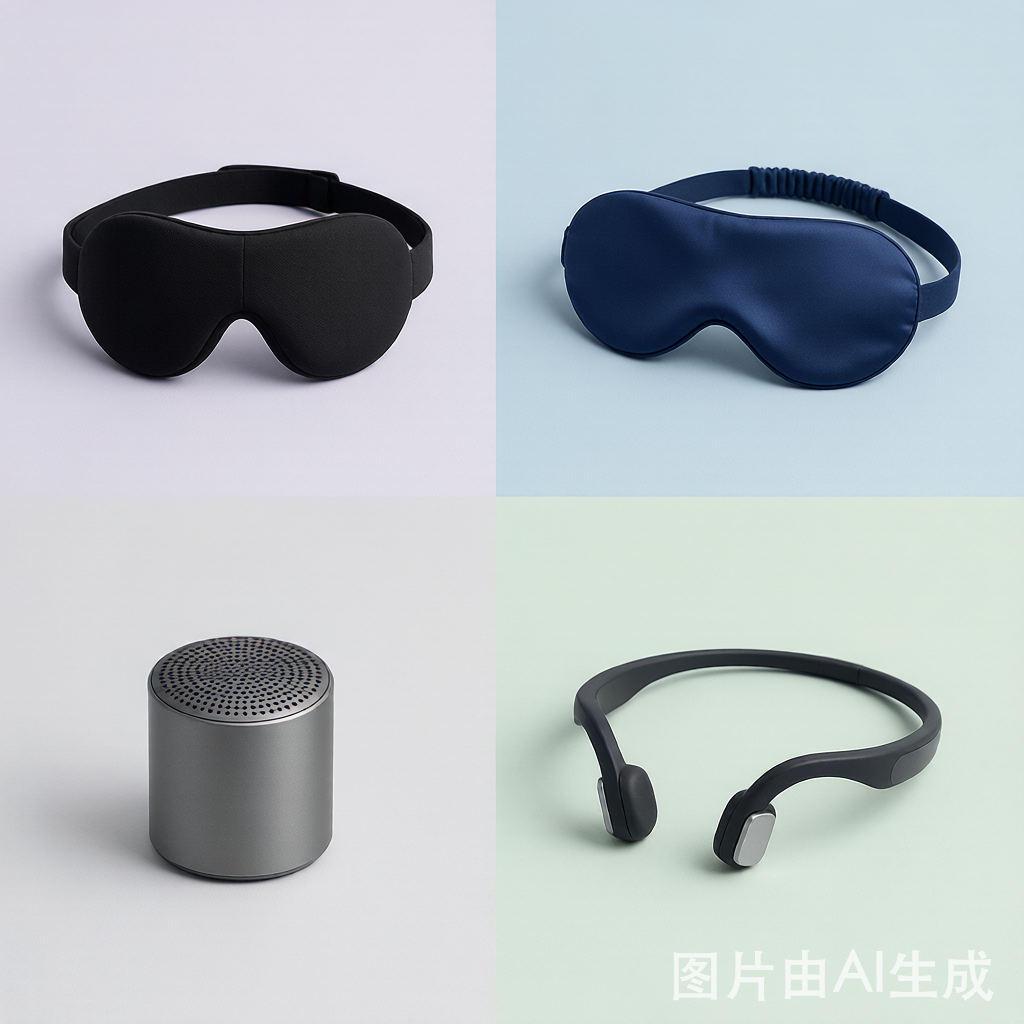
Product Comparison at a Glance
| Product Type | Wholesale Price | Retail Price | Bluetooth | Battery | Key Differentiator |
|---|---|---|---|---|---|
| 3D Contoured | 4.00–7.00 | 15.99–29.99 | 5.0–5.3 | 8–14 hr | Best seller, widest appeal |
| Silk | 5.50–8.25 | 29.99–49.99 | 5.0–5.3 | 8–12 hr | Luxury tier, 2–3× retail markup |
| White Noise + Timer | 5.50–8.25 | 24.99–39.99 | 5.0–5.3 | 8–14 hr | All-in-one, no phone needed |
| Bone Conduction | 6.00–9.50 | 34.99–59.99 | 5.0–5.3 | 10–20 hr | Open-ear design, tech-forward |
3D Contoured Sleep Masks
The workhorse of the category. 3D contoured masks feature raised eye cups that eliminate pressure on the eyelids and lashes while maintaining 100% blackout. They’re the top-selling format on Amazon and the safest bet for a first OEM product.
If you’re picking your first SKU, this is it. The 3D contour design addresses the two complaints that kill sleep mask reviews: eye pressure and ear pain for side sleepers. Speaker thickness runs 3–4mm (ultra-thin), and material options include memory foam, breathable mesh, and cotton.
Silk Sleep Masks with Bluetooth
Natural silk (typically 19–22 momme) elevates the product from a functional gadget to a luxury sleep accessory. Silk is hypoallergenic, temperature-regulating, and gentle on skin and hair, features that command premium positioning. At 29.99–49.99 retail versus a 5.50–8.25 wholesale cost, the margin story is compelling.
One thing most importers miss: verify the silk grade. Some factories sell polyester satin as “silk,” and your customers will notice. Amazon reviews don’t forgive that kind of substitution, and neither do consumer protection agencies. Always request a material composition test report.
Sleep Masks with White Noise & Sleep Timer
Your customer doesn’t want to reach for their phone at 2 AM. Built-in white noise generation and programmable sleep timers (15/30/60/90 minutes) add significant consumer value without a proportional cost increase. These models come with 8–12 preloaded sound options (white noise, rain, ocean, etc.) and appeal to users who want an all-in-one device that works independently of their phone.
This format is especially strong for the senior consumer segment and the travel market, where carrying fewer devices is a genuine advantage.
Bone Conduction Sleep Headbands
Bone conduction technology transmits audio through the cheekbones rather than the ear canal, leaving ears completely open. This format has been pioneered by brands like SleepPhones by AcousticSheep, the headband-style sleep headphone that launched the entire category and retails at approximately $99.95 for the wireless model.
The opportunity for OEM importers is the price gap: your bone conduction headband at 34.99–59.99 retail versus SleepPhones at $99.95. The technology is the same. The brand premium is not.
Keep in mind that headbands don’t block light; they’re purely audio devices. Some brands bundle a separate sleep mask with the headband, or use a wider headband design that provides partial light blocking. Clarify the format with your manufacturer before committing.
Bluetooth Sleep Mask Wholesale Pricing & Cost Structure
Most importers calculate factory price × quantity and call it done. Then the margin disappears: shipping, duties, customs fees, inland trucking, Amazon commissions. The factory price is just the starting point.
Bluetooth sleep mask wholesale prices range from 2.89to2.89to8.25 per unit factory-direct, with standard 3D contour models clustering at 4.00–4.00–7.00/unit for orders of 300–500 units.
Factory-Direct Pricing Benchmarks
Based on current Alibaba and Accio sourcing data (2025–2026), here’s the real wholesale pricing landscape for bluetooth sleep masks:
| Product Tier | Factory Price/Unit | MOQ Range | Key Features |
|---|---|---|---|
| Budget | 2.89–3.50 | 500–1,000 | Basic 3D mask, Bluetooth 5.0, 8hr battery, cotton |
| Standard | 4.00–5.50 | 300–500 | 3D contour, Bluetooth 5.0, 10hr battery, memory foam |
| Premium | 5.50–7.00 | 300–500 | Silk/cooling fabric, Bluetooth 5.3, 14hr battery, white noise |
| Feature-rich | 7.00–8.25 | 500–1,000 | All features + sleep timer, app integration, 20+ hr battery |
Pricing variables that matter:
- Bluetooth version: Upgrading from 5.0 to 5.3 typically adds 0.20–0.50/unit
- Battery capacity: Moving from 200mAh (8hr) to 400mAh (20hr) adds 0.30–0.80/unit
- Material: Silk vs. cotton adds 1.00–2.50/unit
- White noise integration: Adds 0.50–1.25/unit for the chip and preloaded content
- Custom packaging: Adds 0.30–0.80/unit depending on design and print quality
How Customization Affects Your Unit Cost
Customization is where unit economics get interesting. Here’s a realistic breakdown for a 500-unit order of a mid-range 3D bluetooth sleep mask:
| Cost Component | Amount | Notes |
|---|---|---|
| Base product (3D contour, BT 5.0, 10hr battery) | $4.50 | Standard OEM pricing |
| Custom logo (screen print) | +$0.20 | One-color, one-position |
| Custom retail box | +$0.55 | Full-color print, custom design |
| Custom Bluetooth device name | +$0.10 | Firmware customization |
| Custom user manual | +$0.15 | Branded layout and content |
| Customized unit cost | $5.50 | Total per unit |
At a 24.99retailprice,yourgrossmarginisapproximately19.49/unit before shipping and duties, a 78% gross margin. Even after accounting for fulfillment costs, Amazon fees (15% referral + FBA fees ~$4.50), advertising (target 20% of revenue), and returns (budget 5%), net margin lands in the 25–35% range for a well-managed listing.
Shipping, Duties & Total Landed Cost Calculator
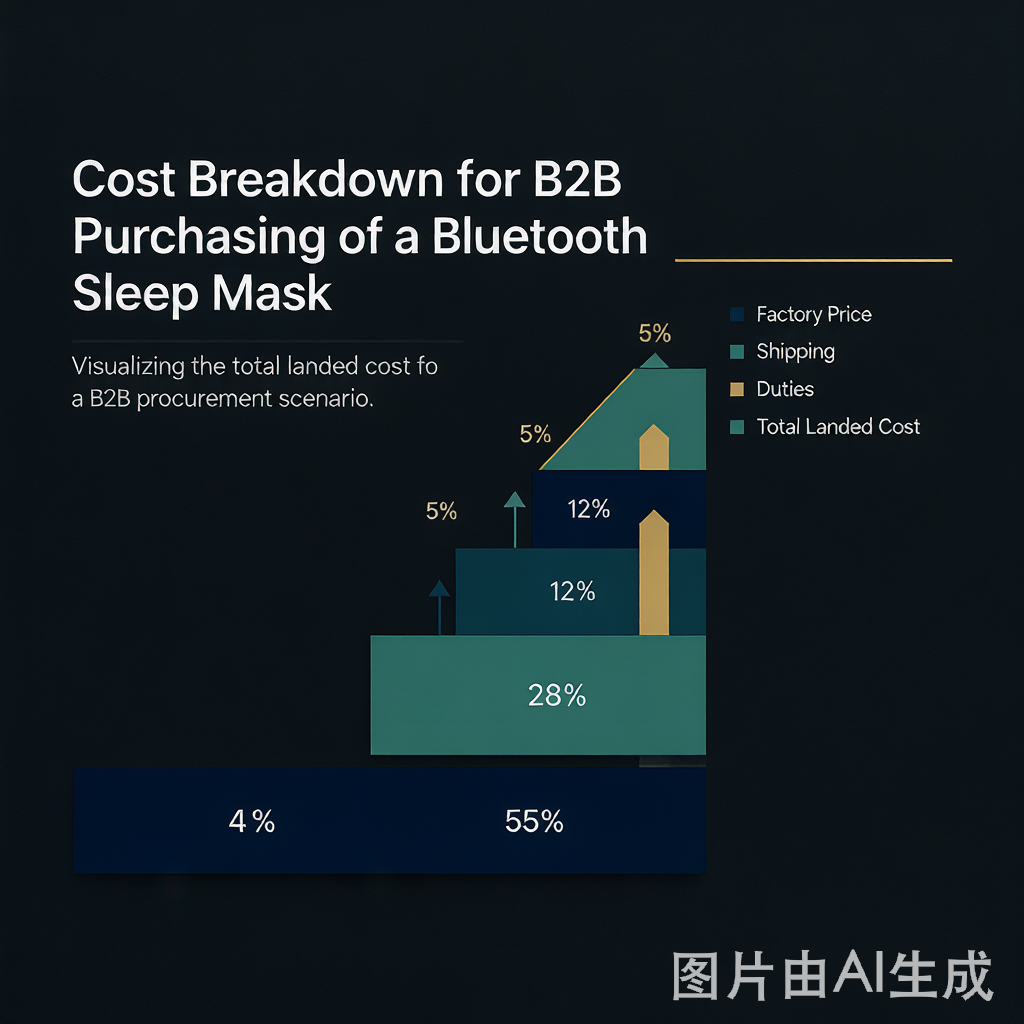
The factory price is just one line item. Here’s how to build a real landed-cost model:
Example: 1,000 bulk bluetooth sleep mask units shipped from Shenzhen to Los Angeles (sea freight)
| Cost Line | Amount | Calculation |
|---|---|---|
| Product cost | $5,500 | 1,000 × $5.50 |
| Domestic trucking (factory to port) | $150 | Standard Shenzhen to Yantian |
| Sea freight (FCL 20ft) | $1,800 | Shenzhen to LA, current rates |
| US customs bond & entry filing | $175 | Annual bond + single entry |
| Customs brokerage | $200 | Licensed broker fee |
| Duty (HTS 8518.30.20 — 3.9%) | $215 | On declared customs value |
| Merchandise processing fee | $25 | MPF, current rate |
| Harbor maintenance fee | $17 | HMF, 0.125% of value |
| Inland trucking (port to warehouse) | $350 | LA port to FBA prep center |
| Total landed cost | $8,432 | |
| Landed cost per unit | $8.43 |
That 5.50factorypricebecame8.43 landed, a 53% increase. This is why importers who only calculate factory price × quantity consistently underprice their products and destroy their margins.
Key duty note: Bluetooth sleep masks are typically classified under HTS code 8518.30.20 (headphones/earphones) at 3.9% duty for US imports. However, if your product includes significant textile components, alternative classification under Chapter 65 (headgear) at 6.5–7.5% may apply. Consult a licensed customs broker for the correct classification; misclassification carries penalties.
Ready to get precise numbers for your specific order? Request a custom quote with itemized costs including shipping estimates and duty calculations.
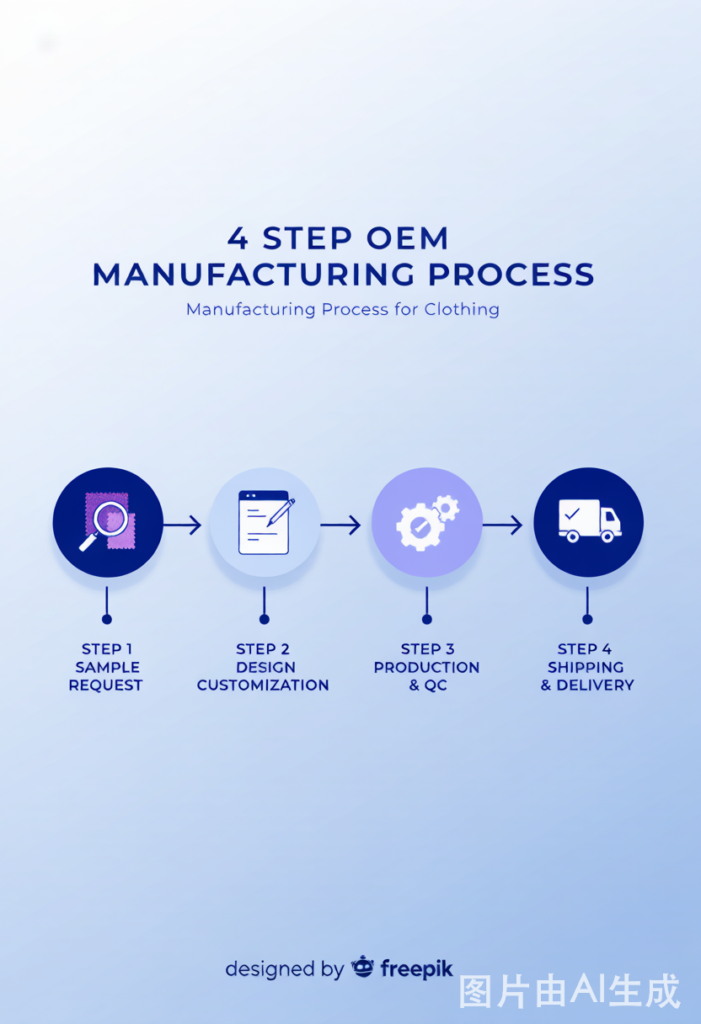
Step-by-Step OEM Process: From Inquiry to Delivery
The OEM process isn’t mysterious. It’s a sequence with real timelines. Know the steps, and you plan launches with confidence. Skip them, and you’re hoping for the best, which is not a strategy.
The OEM sourcing process follows four key steps: (1) Request and evaluate samples (7–10 days), (2) Customize design and approve pre-production sample (5–15 days), (3) Production and quality control with AQL inspection (20–35 days), (4) Shipping and customs clearance (15–40 days). Total timeline: approximately 8–10 weeks.
Step 1: Sample Request & Evaluation (7–10 Days Typical)
Before committing any capital, order physical samples. This is non-negotiable.
What to specify in your sample request:
- Exact product model and configuration (material, Bluetooth version, battery capacity)
- Any custom features you need evaluated (logo position, firmware branding, packaging mockup)
- Target markets (so the manufacturer can confirm certification coverage)
- Quantity of samples needed (typically 2–3 units for internal evaluation)
What to evaluate when samples arrive:
- Comfort test: Wear the mask for a full night. Is there pressure on your eyes? Can you sleep on your side without speaker discomfort?
- Audio quality: Test Bluetooth pairing reliability, sound clarity, and maximum volume. Test at 3+ meters from the phone to verify range.
- Build quality: Check stitching, material feel, speaker positioning, and charging port alignment.
- Battery performance: Fully charge, then play audio at moderate volume until battery dies. Verify the claimed playback hours.
- Light blocking: Wear in a brightly lit room. Check for light leakage around the nose bridge, the #1 consumer complaint at 12.9% of negative reviews.
Typical sample cost: 30–80 per unit (often refundable against production orders). Sample production time: 7–10 business days with a capable manufacturer.
Step 2: Design Customization & Approval (5–15 Days)
Once you’ve approved the base product, customization begins:
- Logo design: Provide vector artwork (AI/EPS/PDF). Factory produces a digital mockup for approval.
- Packaging design: Supply dieline template (factory provides), design artwork, and review 3D proof.
- Firmware customization: Specify Bluetooth device name, LED color, preloaded content (if applicable).
- Pre-production sample (PP sample): Factory produces one unit with all customizations applied. This is your golden sample, the reference standard for production.
Never approve mass production based on a digital mockup alone. Always require a physical PP sample. The color of your logo printed on silk looks different in a rendering versus on the actual fabric.
Step 3: Production & Quality Control (20–35 Days)
With the PP sample approved, production begins.
Production timeline (typical 1,000-unit order):
- Material procurement: 5–7 days
- Production assembly: 10–15 days
- Quality inspection (AQL): 2–3 days
- Packaging and labeling: 2–3 days
- Total: ~20–28 days
Quality control, what to require:
- AQL inspection: Before shipment, an independent third-party inspector should conduct an AQL Level II inspection following ISO 2859-1 standards. Cost: 300–600 per inspection. This single investment prevents thousands of dollars in returns and refunds.
- Defect classification: Define acceptable quality levels in your purchase agreement. A typical standard: Critical defects = 0%, Major defects ≤ 2.5%, Minor defects ≤ 4.0%.
- Functional testing: Every unit should be tested for Bluetooth pairing, audio output, and charging function before packing. This is standard at reputable factories, but verify it’s happening, don’t assume.
The story of a near-disaster: Sarah Chen, an Amazon seller based in Portland, ordered 2,000 bluetooth sleep masks from a new supplier in 2024. She skipped the pre-shipment AQL inspection to save $400.
When the container arrived, 18% of units had misaligned speakers that pressed directly against the ear canal, making side-sleeping impossible. Her return rate hit 22% in the first month.
Amazon suppressed her listing for “high defect rate,” and she spent 12,000onreplacementinventoryandremovalfees.That400 inspection would have caught the defect before shipping. Sarah now insists on third-party AQL inspections for every order, and her return rate has dropped to under 3%.
Step 4: Shipping & Customs Clearance (15–40 Days)
| Shipping Method | Transit Time | Cost (1,000 units) | Best For |
|---|---|---|---|
| Sea freight (FCL) | 15–25 days | 1,500–2,500 | Orders ≥1,000 units, cost-sensitive |
| Sea freight (LCL) | 20–30 days | 2,000–3,500 | Orders 300–999 units |
| Air freight | 5–8 days | 3,500–6,000 | Rush orders, small test quantities |
| Express (DHL/FedEx) | 3–5 days | 4,000–8,000 | Samples only, extremely urgent |
Customs clearance checklist:
- Commercial invoice (matching PI exactly)
- Packing list
- Bill of lading (sea) or air waybill (air)
- FCC/CE certification copies
- Product compliance documentation
- Country of origin marking (required on product and packaging)
Common delay: Incorrect or inconsistent documentation between the commercial invoice and packing list is the #1 cause of customs holds. Ensure your manufacturer provides documents that are internally consistent and match your import records.
Need a partner who handles the complexity? Get a custom quote with full documentation support and shipping coordination built in.
Common Bluetooth Sleep Mask Sourcing Mistakes
Five mistakes. We’ve seen each one cost importers anywhere from 400to12,000. All preventable, if you know the pattern.
Mistake 1: Choosing a Supplier Based on Price Alone
The cheapest quote is rarely the cheapest total cost. A factory offering $2.89/unit for a basic bluetooth sleep mask may lack CE/FCC certifications, use inferior Bluetooth chips with unstable connections, and skip functional testing before packing. The result: high return rates, negative reviews, and potential customs seizures of uncertified electronics.
Fix: Evaluate suppliers on five criteria: price, certifications, production quality systems, communication responsiveness, and third-party inspection readiness. A 5.50/unitproductfromacertifiedfactorywithAQLinspectionprotocolsisalmostalwaysmoreprofitablethana2.89/unit product with no quality controls.
Mistake 2: Skipping the NNN Agreement Before Sharing Specs
Before you share your product modifications, firmware requirements, or packaging designs with a factory, you need legal protection. Without a Non-Disclosure, Non-Use, Non-Circumvention (NNN) agreement, your designs can be used for other clients, sold to competitors, or listed on Alibaba by the factory itself.
Fix: Have a China-law-governed NNN agreement drafted (in Chinese and English) and signed before sharing any technical specifications. For high-value IP, consider filing a Chinese utility model patent (300–600) before approaching manufacturers.
Mistake 3: Paying 100% Upfront
This is the single highest-frequency error that leads to financial loss. Once you’ve paid 100%, the manufacturer has zero incentive to meet deadlines, fix defects, or prioritize your order.
Fix: Use the standard 30/70 payment structure: 30% deposit to start production, 70% balance after pre-shipment inspection and before cargo release. For first-time orders, use Alibaba Trade Assurance or a letter of credit for added protection.
Mistake 4: Not Ordering a Pre-Shipment AQL Inspection
As Sarah Chen’s story illustrated, skipping the 300–600 inspection is a false economy that has cost importers thousands, sometimes tens of thousands, in defective product returns and brand damage.
Fix: Book a third-party AQL Level II inspection before paying the 70% balance. The inspector checks a statistical sample from your production run against defined defect criteria. If the inspection fails, you have leverage to demand rework before shipment, not after.
Mistake 5: Underestimating Total Landed Cost
Many importers build their margin model on factory price + freight, forgetting duties, customs fees, insurance, inland trucking, and Amazon/e-commerce fulfillment costs. The result: a product that looked profitable on paper operates at a loss.
Fix: Build a four-line landed cost calculator before placing any order:
- Factory unit cost × quantity
- Freight + insurance
- Duties + taxes (based on correct HTS classification)
- Customs brokerage + inland delivery + warehousing
If the numbers don’t work at the landed cost level, they certainly won’t work after you add marketing, returns, and platform fees.
Why Leach Trading
We’ve seen what happens when importers skip the AQL inspection, pick the cheapest factory, or order 5,000 units on a hunch. That’s why Leach Trading built a different model, one that lets you start small and scale with data, not guesswork.
- Low MOQ — Start with 300–500 units, not 5,000+. Test your market, validate demand, and scale when the data supports it.
- CE/FCC certified — Every bluetooth sleep mask ships with the certifications required for US and EU market entry. No customs holds, no compliance surprises.
- 7–10 day sample turnaround — From inquiry to physical sample on your desk in under two weeks. You evaluate real product, not renders.
Beyond these fundamentals, you get full customization (custom logo, custom packaging, custom firmware branding, and private-label documentation), third-party audit readiness (Leach Trading welcomes factory audits and third-party inspections, no hidden subcontracting), and focused expertise. Since 2022, Leach Trading has specialized exclusively in sleep technology products: bluetooth sleep masks, under pillow speakers, and sunrise alarm clock solutions. Deep specialization means better product quality and faster problem-solving.
Whether you’re an Amazon FBA seller testing your first sleep-tech SKU, a DTC brand expanding into audio wellness, or a corporate gift buyer sourcing for the holiday season, Leach Trading’s low-MOQ model lets you start smart and scale confidently.
Bluetooth Sleep Mask OEM FAQ
What is the minimum order quantity for bluetooth sleep masks?
Most OEM manufacturers require 300–500 units as a starting MOQ for standard product configurations. Custom designs with specialized materials, custom packaging, or firmware modifications may require 1,000+ units. Leach Trading offers MOQ as low as 300 units for standard configurations, making it accessible for first-time importers and smaller brands.
How long does it take to get samples?
With a capable manufacturer, sample production takes 7–10 business days. Shipping time adds 3–5 days via express courier (DHL, FedEx). Total time from inquiry to sample in hand: approximately 10–15 days. Leach Trading consistently ships samples within the 7–10 day window.
Do bluetooth sleep masks require FCC certification for the US market?
Yes. Any device that emits radio frequency signals, including Bluetooth, must have FCC certification (or FCC Declaration of Conformity) to be legally sold in the United States. Products without FCC marking are subject to customs seizure, and selling them on Amazon or through retail channels violates federal regulations. Always verify FCC documentation with your supplier before ordering.
Can I customize the Bluetooth device name shown on users’ phones?
Yes. Most OEM manufacturers can program a custom Bluetooth broadcast name (e.g., “YourBrand SleepMask” instead of a generic identifier like “BT5.0-Headphone”). This is a firmware customization that typically adds 0.10–0.15 per unit and strengthens brand recognition every time a customer pairs their device.
What’s the typical lead time from order to delivery?
For a standard 1,000-unit order with basic customization, the timeline is approximately:
- Sample evaluation: 2 weeks
- Design approval: 1 week
- Production: 3–4 weeks
- Sea freight (Shenzhen to US): 2–3 weeks
- Customs clearance + inland delivery: 1 week
Total: approximately 8–10 weeks from inquiry to warehouse delivery. Plan accordingly, especially if targeting Q4 seasonal demand.
How do I verify a bluetooth sleep mask manufacturer’s quality?
Three steps: (1) Request copies of CE/FCC/RoHS certification documents and verify them against the certifying body’s database. (2) Order and physically evaluate samples before committing to production. (3) Book an independent third-party AQL inspection before shipment. A manufacturer that resists any of these steps is a manufacturer to avoid.
Ready to source bluetooth sleep masks from a certified, low-MOQ OEM partner? Request a free sample or get a custom quote. Leach Trading’s team responds within 24 hours with detailed pricing, certification documentation, and shipping estimates tailored to your market and order volume.