
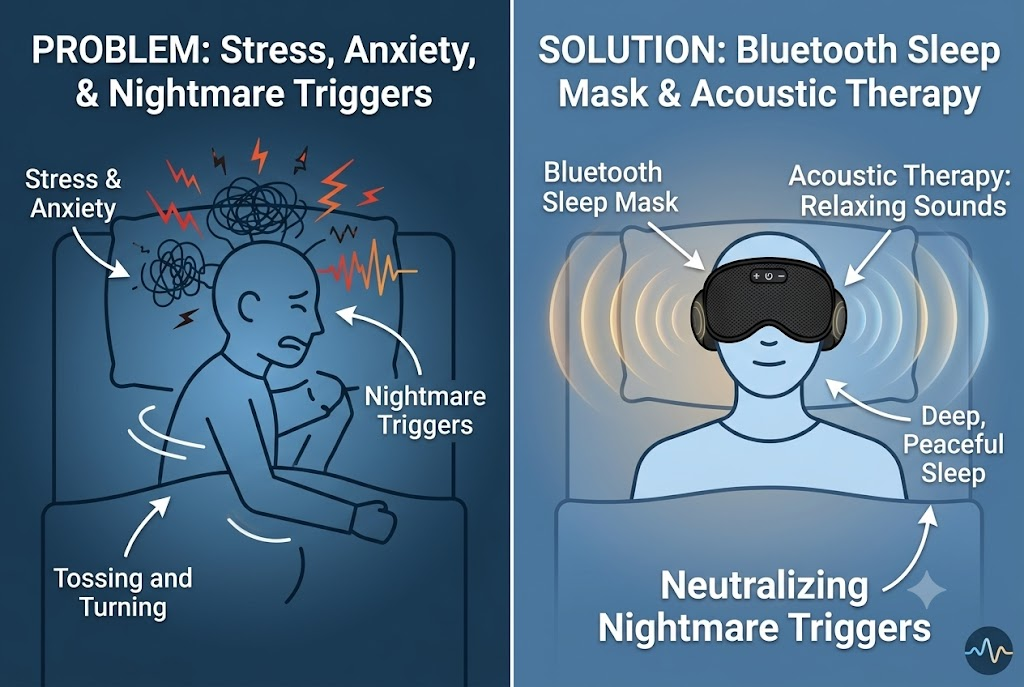
Nightmares and vivid stress dreams are more than just uncomfortable psychological experiences—they are physiological interruptions that fragment Rapid Eye Movement (REM) sleep. High stress, nocturnal ambient noise, and unwanted light exposure trigger micro-arousals during autonomic sleep cycles, forcing the brain into heightened dream recall and panic responses.
For sleep wellness brands, addressing dream-disruptive environments represents a major product expansion opportunity. By leveraging engineered sleep products oem manufacturing, importers can offer active sensory-deprivation tools designed to combat nightly stress indicators.
The Neuroscience of Stress Dreams & Sensory Overload
During REM sleep, the brain processes emotional processing. External stimuli—such as flickering streetlights or sudden urban sound spikes—penetrate the sleeping auditory cortex without fully waking the subject, manifesting as threatening narrative themes in dreams.
- Light Intrusion: Ambient blue light bleeds through thin eyelids, disrupting nocturnal melatonin synthesis and accelerating cortical arousal.
- Acoustic Disturbance: Irregular urban noise triggers sympathetic fight-or-flight responses, elevating heart rate during dream phases.
- Sensory Masking Solutions: Combining 100% light blockout with ultra-thin Bluetooth speaker modules provides continuous, relaxing auditory masking (pink noise, rain loops) that suppresses dream disruptions.
Engineering Effective Sleep Hardware: What B2B Buyers Need
Offering a private label solution requires prioritizing ergonomic comfort alongside electronics reliability. When working with a specialized OEM partner, evaluate these manufacturing specifications:
1. Detachable & Washable Textile Ergonomics
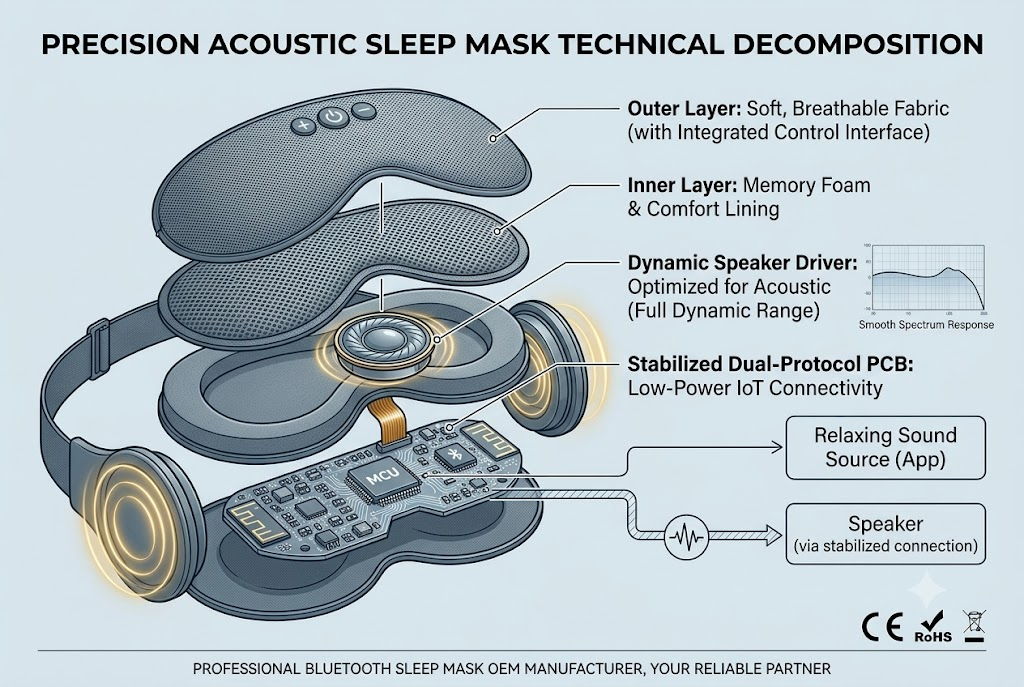
Hygiene is paramount for wearables. Sourcing a custom bluetooth sleep mask with removable electronic modules allows consumers to wash the outer silk/bamboo fabric regularly without damaging internal wiring or Bluetooth 5.3 modules.
2. Ultra-Flat Speaker Modules & Side-Sleeper Comfort
Standard headphones create painful pressure points against the temporal bone. Industrial design must incorporate ultra-thin, padded driver units housed within memory foam contours to accommodate side sleepers effortlessly.
Expanding Your Brand’s Nighttime Product Portfolio
Educating your consumers on nightmare mitigation opens immediate cross-selling avenues. Consider bundling light-blocking wearables with personalized audio delivery systems, such as non-wearable under-pillow speakers or deep relaxation sensory tools like weighted blankets and tactile aids.
Ensure all custom sleep hardware maintains regulatory compliance with FCC ID, CE-RED, and RoHS international trade safety standards.
[Partner with LEACH to Develop Custom Private Label Sleep Masks Today!]