
The wake-up light category has moved well past its early “niche gadget” phase. It now sits on shelves next to standard alarm clocks in mainstream home goods stores. For B2B buyers, that shift creates a real opportunity. It also raises a harder question. Which price tier, which features, and which retail channel actually fit your business? This guide breaks down current wake-up light market trends so you can plan a smarter assortment instead of guessing.
 Wake-up light demand is not flat throughout the year. It follows a predictable cycle instead. Buyers who plan inventory around that cycle consistently outperform buyers who order in fixed quarterly batches without adjusting for season.
Why the Wake-Up Light Category Keeps Growing
Three forces drive demand in this category. First, sleep wellness has become a mainstream consumer priority, not a fringe interest. Second, more people report screen fatigue from phone-based alarms. They want a dedicated device instead of one more reason to check their phone at night. Third, winter light therapy awareness continues to rise. Public health guidance from organizations such as the National Institute of Mental Health discusses light therapy as a recognized approach for seasonal mood changes. Together, these three forces pull buyers from very different motivations toward the same product shelf. Sleep tech shoppers, wellness shoppers, and gift shoppers all end up looking at the same category for different reasons.Price Tier Breakdown: Entry, Mid-Range & Premium
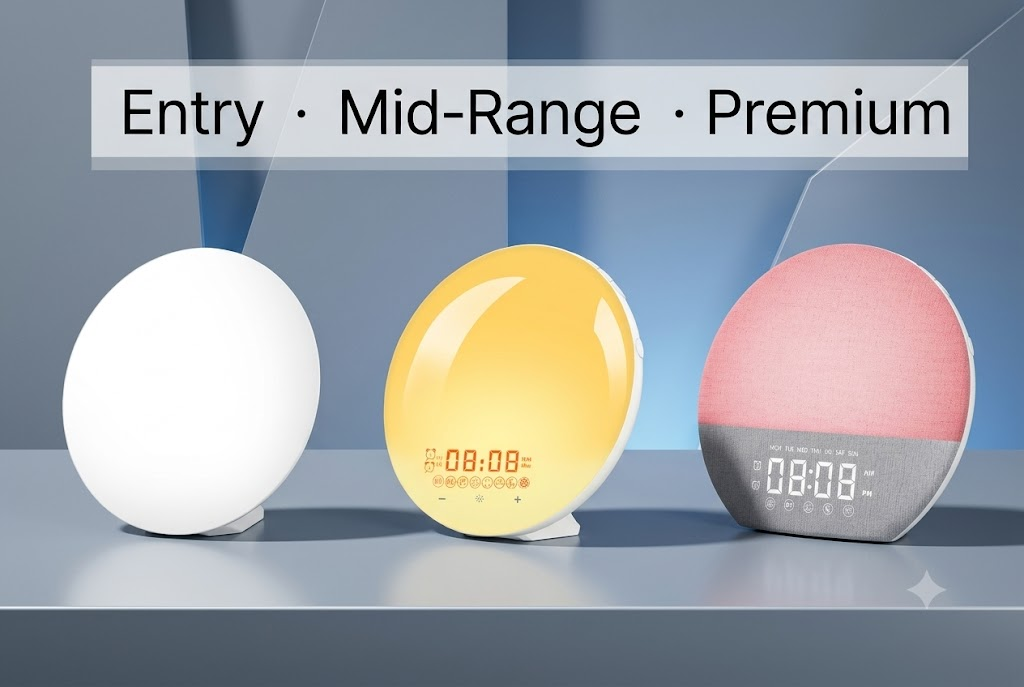
Not every wake-up light targets the same buyer. Understanding the tier structure matters. It helps you avoid stocking a single SKU that tries to serve everyone. That kind of SKU usually ends up serving no one particularly well.Entry-Level Wake-Up Lights ($15–$25 Retail)
- Simple sunrise simulation with a fixed or limited number of brightness steps
- Basic alarm sounds, often 3–5 preset tones
- Plastic housing in a small number of color options
- Best suited for impulse purchase placements and value-focused retail channels
Mid-Range Sunrise Alarm Clocks ($30–$60 Retail)
- Adjustable sunrise/sunset window, typically 10–60 minutes
- FM radio or Bluetooth audio as a standard feature, not an upsell
- Touch controls and a nightlight mode for secondary use
- This tier drives the highest sales volume across most Western markets
Premium Light-Therapy Wake-Up Lights ($70+ Retail)
- Higher lux output positioned explicitly for light-therapy use cases
- App connectivity for schedule automation and sleep tracking integration
- Premium materials, such as fabric-wrapped housings or aluminum accents
- Sells well through wellness retailers, pharmacy channels, and direct-to-consumer subscription brands
Seasonal Demand Patterns Every B2B Buyer Should Plan Around
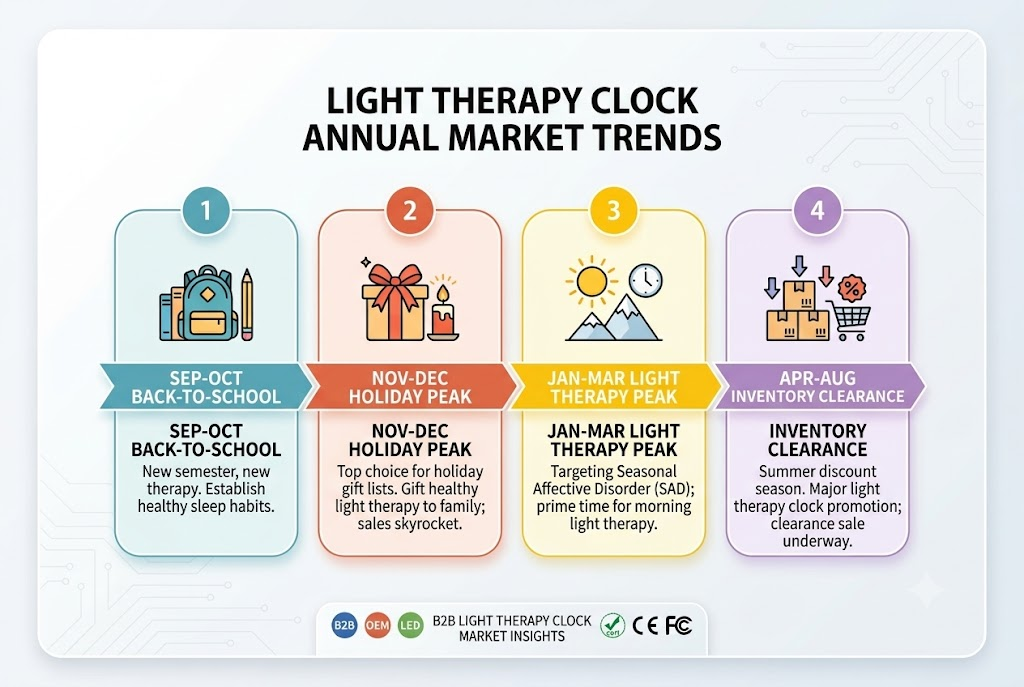 Wake-up light demand is not flat throughout the year. It follows a predictable cycle instead. Buyers who plan inventory around that cycle consistently outperform buyers who order in fixed quarterly batches without adjusting for season.
- September–October: back-to-school and back-to-routine demand begins to build
- November–December: holiday gifting drives the single largest sales spike of the year
- January–March: winter light-therapy season, especially strong in northern-latitude markets
- April–August: a slower period, better suited for clearing older SKUs and testing new colorways
Retail Channel Positioning: Where Each Tier Sells Best
Amazon & General E-Commerce
Entry and mid-range tiers dominate here. Buyers compete heavily on review count and price. Packaging and unboxing photos matter more than they do in physical retail, since they carry the entire first impression online.Wellness & Pharmacy Retail
Premium, light-therapy-positioned units perform best in this channel. Shoppers expect a clear explanation of lux output. They also want a clear statement of intended use. Product copy needs more technical depth here than a typical Amazon listing requires.Home Goods & Big-Box Retail
Mid-range units with strong shelf presence do well here. Packaging design carries more weight than it does online. Shoppers judge the product in seconds while walking past a shelf, so the box has to do most of the selling.DTC Subscription & Wellness Brands
Premium tier units fit naturally into a broader sleep-routine product ecosystem. Our earlier guide on sunrise alarm clock wholesale and OEM sourcing covers the customization options that help a private-label SKU stand out in this specific channel.Common Mistakes B2B Buyers Make in This Category
Most sourcing mistakes in this category come from treating it like a simple electronics purchase. A few patterns show up again and again:- Skipping the sample stage and ordering a full container based on a spec sheet alone
- Underestimating lead time before a seasonal peak, then missing the window entirely
- Choosing one tier for the whole catalog instead of stocking a small ladder across price points
- Ignoring after-sales support terms, which matter more for electronics than for most other sleep-wellness products
Building Your Assortment: A Practical Framework
Start with your primary sales channel, not your favorite feature set. A wellness retailer needs a different lead SKU than an Amazon storefront does. From there, follow a few practical steps:- Pick one hero SKU per tier rather than spreading budget across too many similar options
- Confirm certification documents early — see our wake-up light export compliance guide for the CE, FCC and RoHS checklist
- Time your first bulk order to land 6–8 weeks before your strongest seasonal window
- Consider a complementary bundle product — our night-to-morning sleep routine bundle guide covers how buyers pair wake-up lights with evening products