
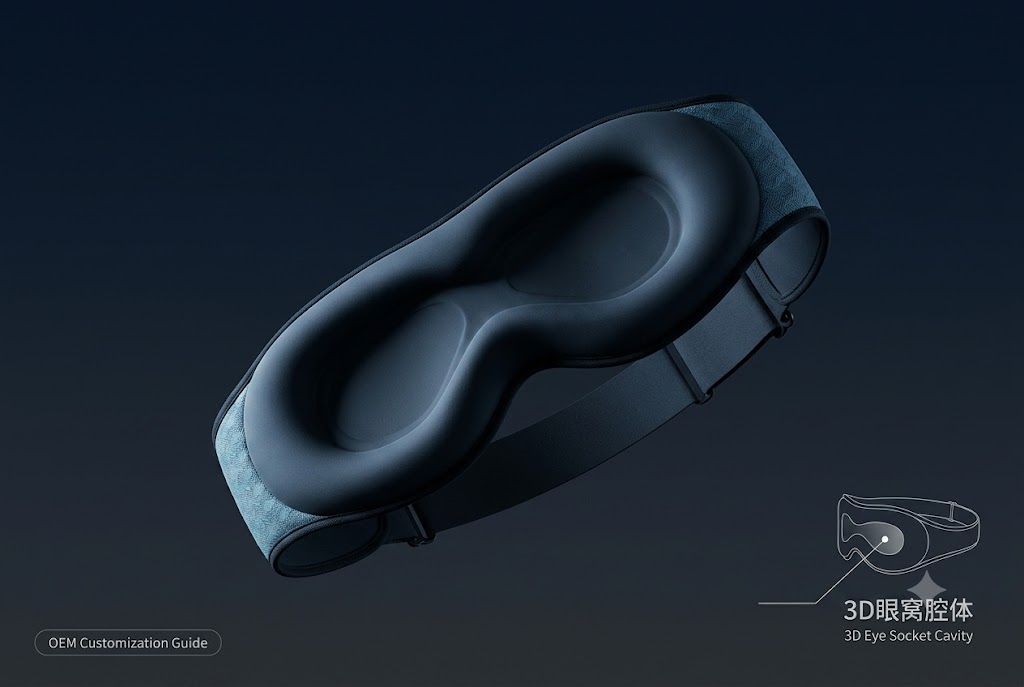
Have you read our earlier guide on how to choose the right sleep mask? This article is the next step. We wrote it for B2B buyers and private-label brands. Maybe you’ve already picked which mask to sell. Now you’re ready to build your own SKU. A 3D sleep mask OEM project involves more sourcing decisions than most buyers expect. These range from cavity molding to Bluetooth firmware. Here’s what actually matters at each stage.
Why 3D Contour Design Matters for Private Label Sleep Masks
Zero Eye-Pressure Cavity Design
A true 3D sleep mask uses a molded internal cavity. The fabric never touches the eyelids or eyelashes. This is the single biggest differentiator between a premium SKU and a flat foam mask. When you review supplier samples, check the cavity depth around the eye socket. A shallow cavity will still press against eyelashes, especially for anyone wearing mascara or false lashes to bed.
Fabric Selection
This category has three common fabric tiers. Mulberry silk offers premium positioning at a higher cost. Cooling fabric targets hot sleepers with moisture-wicking material. Memory foam with a soft-touch cover sits mid-range and gives the best pressure distribution. Buyers building a gift-market SKU tend to favor silk. Buyers targeting a broader wellness audience often do better with cooling fabric, since it works year-round.
Integrating Bluetooth Audio: Firmware & Driver Considerations
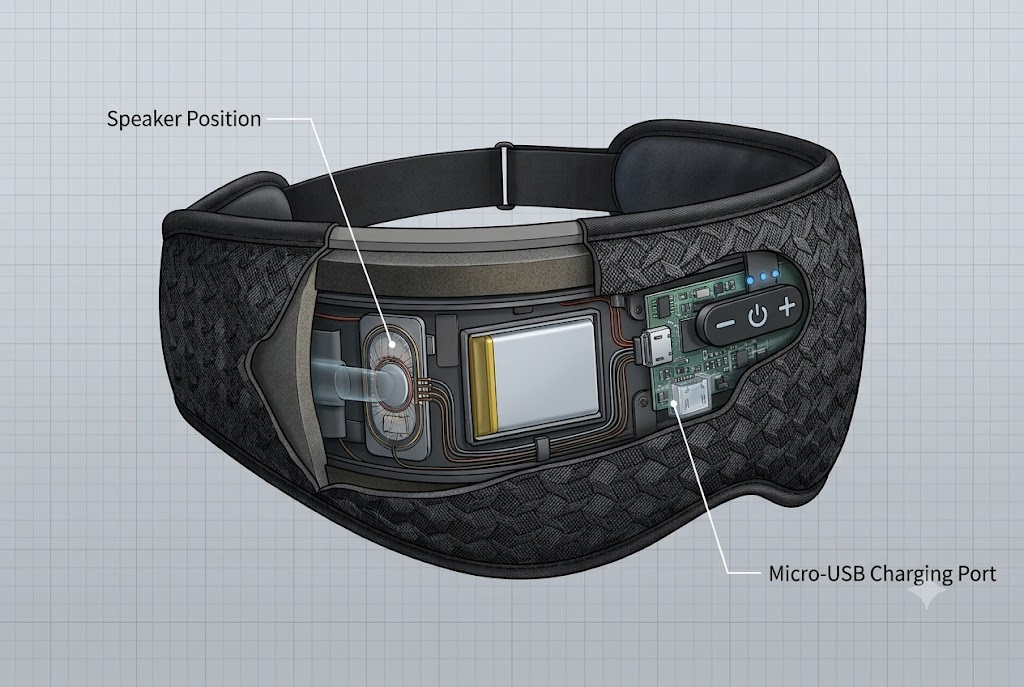
Speaker Placement
Most 3D Bluetooth sleep masks use ultra-thin flat speakers near the ear. This differs from true in-ear components. If you also carry a bone conduction sleep speaker line, compare both audio methods with your supplier. Some factories offer a bone-conduction variant of the same mask shell. That gives you two SKUs from one mold investment.
Battery Life & Charging Standards
Look for a minimum 10–12 hour playback rating on a single charge. A mask that dies mid-night creates the exact complaint that drives returns. USB-C charging is now the baseline expectation in most export markets. Don’t treat it as a premium add-on.
OEM Customization Checklist for B2B Buyers
- Mold ownership: confirm whether the 3D cavity mold is shared across multiple clients or exclusive to your order
- Fabric and color customization: request swatches before committing to a bulk color run
- Packaging and unboxing design: gift-tier positioning depends heavily on box quality, not just mask quality
- Firmware customization: auto-off timer, volume-limiting for hearing safety, and companion app pairing
- Sample lead time: confirm turnaround before your first bulk PO to avoid launch-date surprises
Certifications to Confirm Before Ordering
A 3D Bluetooth sleep mask combines a textile product with an electronic component. It needs to clear compliance on both fronts. On the electronics side, the same CE, FCC and RoHS checklist from our export compliance guide applies directly. On the fabric side, buyers targeting chemical-sensitive markets often request OEKO-TEX certification on the mask’s fabric. This supports marketing claims around skin-safe materials.
Frequently Asked Questions
What’s the difference between a standard sleep mask and a 3D sleep mask?
A standard sleep mask is a flat pad of fabric that rests directly on the eyes. A 3D sleep mask uses a molded cavity instead, so the material never touches the eyelids or lashes. This makes it more comfortable for extended wear and side sleeping.
Can I get a bone conduction version of a 3D sleep mask from the same supplier?
Many factories that produce 3D sleep masks use embedded flat speakers. Some can also offer a bone-conduction driver variant on the same shell. This lets you offer two audio options without commissioning a separate mold.
How long does OEM sample development typically take for a custom 3D sleep mask?
If your supplier works from an existing mold with only fabric or color changes, samples are typically ready in 1-2 weeks. A fully custom mold and internal speaker layout can take 4-6 weeks before you get a production-ready sample.