
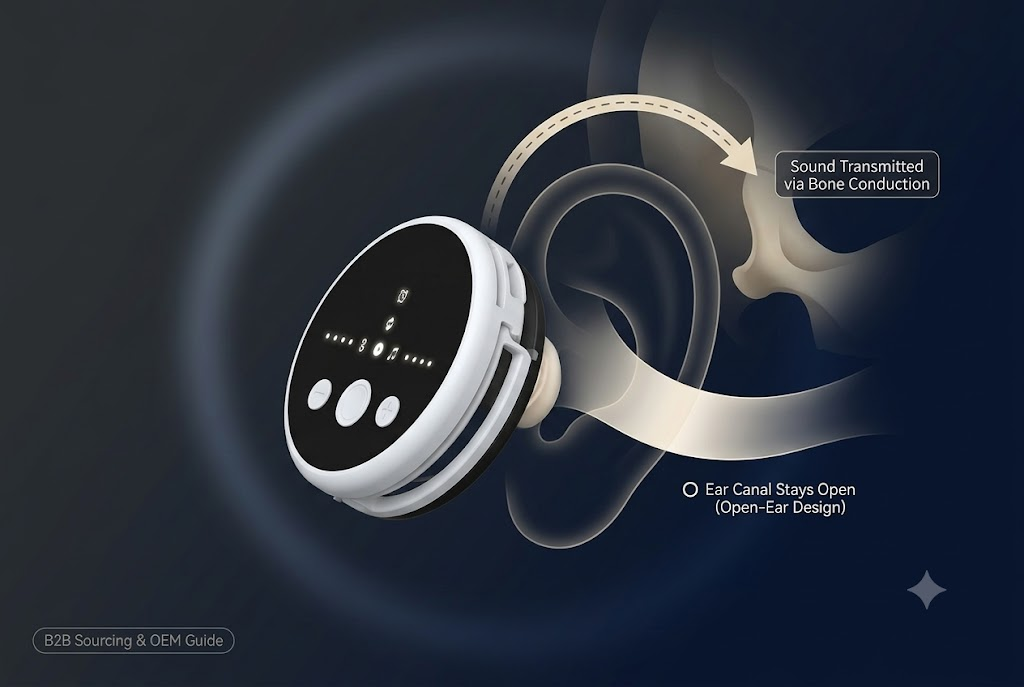
A bone conduction sleep speaker has become one of the fastest-growing SKUs in the sleep-wellness category, largely because it solves a real complaint: standard headphones are uncomfortable for side sleepers. For importers and private-label buyers evaluating this category for the first time, this guide covers what actually separates a well-engineered supplier from a factory simply gluing a Bluetooth module onto a headband.
What Is a Bone Conduction Sleep Speaker?
Unlike in-ear or over-ear headphones, a bone conduction sleep speaker transmits sound through vibrations against the cheekbone, leaving the ear canal completely open. This design is what makes the category attractive for sleep use — there’s no pressure point against the pillow, and no plastic component blocking the ear overnight.
Why B2B Buyers Are Adding This Category to Their Lineup
Comfort for Side Sleepers
Side sleepers represent the largest complaint segment for traditional sleep headphones. A flat, low-profile bone conduction band that sits along the temple rather than inside the ear solves the pressure-point problem that drives returns and negative reviews for competing products.
Natural Cross-Sell With Sleep Masks
Many buyers bundle a bone conduction sleep speaker with a sleep mask to sell a complete “block light, hear sound” solution. If you already carry our light-blocking sleep mask range, a bone conduction speaker is a natural line extension rather than a completely new supplier relationship — both product families sit under our broader sleep headphone collection.
Certifications & Safety Checks Before You Order
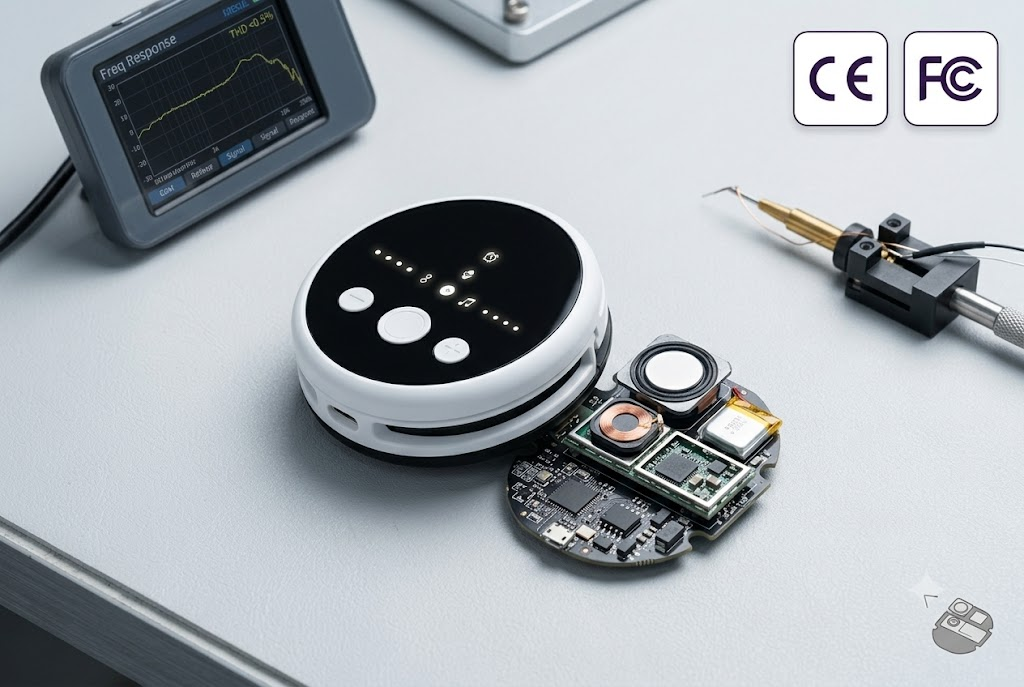
Bluetooth Qualification
Any Bluetooth-enabled sleep speaker sold under a private label should be built on a chipset with valid Bluetooth SIG qualification, not just a generic unlicensed module. Buyers can cross-check a supplier’s claimed chipset against the official Bluetooth SIG qualification listing before committing to a bulk order.
CE, FCC & RoHS
As with any wireless electronic device, a bone conduction sleep speaker still requires CE marking for the EU, FCC certification for the US, and RoHS compliance for restricted substances. We cover the documentation buyers should request from any supplier in our export compliance guide for sleep-tech electronics — the same request checklist applies here.
OEM Customization Options to Discuss With Your Supplier
- Band material and flexibility: silicone hardness and memory-wire core gauge affect all-night comfort
- Driver frequency tuning: bone conduction drivers can sound thin without proper low-frequency compensation — ask for a sample before bulk order
- Battery life: 8–10 hours playback is the current category benchmark for a full night’s use
- Sleep-specific firmware: auto-sleep timer, low-volume night mode, and pairing with a companion sleep-sound app
- Logo printing and packaging: standard OEM service across most MOQ tiers
Building a Complete Sleep-Audio Product Line
Distributors building out a full sleep-wellness catalog often pair a bone conduction sleep speaker with a morning-side product as well — our recent guide on sunrise alarm clock wholesale and OEM sourcing covers the same due-diligence checklist for the “wake-up” side of the routine, so the two guides work well read together when planning a category launch.
Frequently Asked Questions
Is bone conduction audio quality as good as regular headphones for sleep use?
Bass response is typically lighter than in-ear headphones since the vibration is transmitted through bone rather than air, but for spoken content, white noise, and ambient sleep sounds — the primary use case for this category — the difference is rarely noticeable to end users.
Do bone conduction sleep speakers need a separate FCC filing from standard Bluetooth headphones?
The FCC filing requirement is based on the radio module used, not the speaker technology, so a bone conduction speaker using a certified Bluetooth chipset generally follows the same FCC Part 15 pathway as any other Bluetooth audio device.
What’s a reasonable MOQ for a private-label bone conduction sleep speaker?
MOQ depends heavily on whether you’re customizing the band mold or just the packaging and logo — ask your supplier for tiered pricing so you can compare a logo-only order against a fully custom design before committing.