
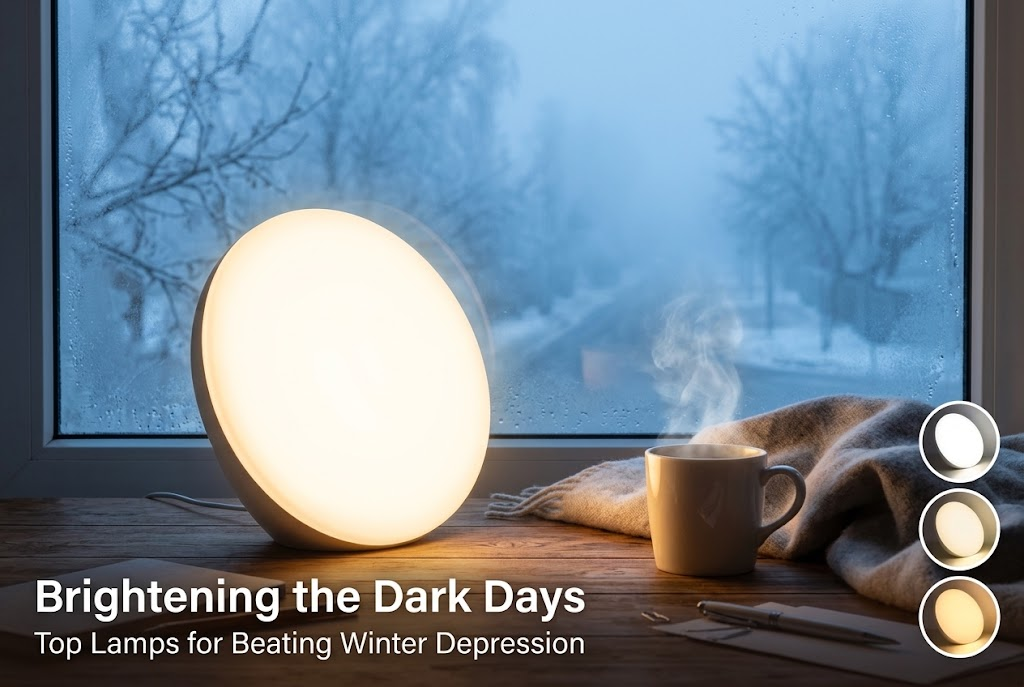
As days get shorter, many people notice their mood dipping along with the daylight. A light therapy lamp is one of the most accessible tools for addressing this seasonal shift. This guide covers what actually separates an effective lamp from a weak one. It covers how to use one correctly, and how to choose the right type for your routine.
This article is for general information only. It is not medical advice. Talk to a doctor before starting light therapy, especially if you have bipolar disorder or an eye condition.
Why Light Matters During Winter
Shorter daylight hours can disrupt your internal body clock and affect mood-regulating brain chemistry. This seasonal pattern is often called seasonal affective disorder, or SAD. It’s why light exposure plays such a central role in winter wellness routines. Our guide to how sunlamps work covers the science behind this in more depth. It includes what actually happens in your eyes when you use one.
The Features That Actually Matter
- 10,000 lux at a stated distance, not just a peak number with no distance attached to it
- UV-filtered output, since a genuine light therapy lamp filters out ultraviolet light rather than adding it
- A broad diffusing panel, which delivers even light without requiring perfect positioning
- Adjustable brightness and a built-in timer, useful for building up exposure gradually
- Portability that fits your routine, whether that’s a desk, a nightstand, or a bag for travel
Our best light therapy lamps guide breaks these features down in more detail. It also covers common mistakes people make when comparing “best of” lists online.
How to Use a Light Therapy Lamp Correctly
Position the Lamp
Place the lamp roughly 16 to 24 inches from your face. Position it slightly above eye level and off to the side. You don’t need to stare directly into it.
Set a Consistent Time
Most sessions run 20 to 30 minutes, ideally within the first hour after waking. Morning use tends to work better than evening use. A bright lamp used late in the day can interfere with sleep.
Stay Consistent
Daily use matters more than any single session. Some people notice a difference within a few days, while others take closer to two weeks of consistent use. Our guide to using a SAD lamp effectively covers the full routine, including the most common usage mistakes to avoid.
Choosing the Right Type of Lamp
Not every light therapy device looks the same. A standard desk-style light box works well for a consistent morning routine at a desk. A wake-up light or dawn simulator builds light exposure into your alarm automatically. That suits people with a rushed morning schedule. Compact panels or light therapy glasses suit smaller spaces or frequent travel. Our wake-up light and sunrise alarm clock guide covers this format specifically, including pricing by tier.
A Common Misconception Worth Clearing Up
Many people searching for winter light solutions assume UV light is the active ingredient. It isn’t. Bright white light, not UV light, is what makes light therapy work. Most legitimate lamps filter UV out entirely for safety. Our winter depression light therapy guide covers this distinction in full. It’s one of the most common points of confusion in this category.
Browse Light Therapy Lamps
Our light therapy and SAD lamp collection includes models built around the features covered above. Each carries UV-filtered output and stated lux ratings at a specific distance. Buyers sourcing in bulk can reference our export compliance guide for the CE, FCC, and RoHS documentation a legitimate supplier should provide.
Frequently Asked Questions
How long does it take for a light therapy lamp to work?
Some people notice a change within a few days of consistent morning use. For others, it takes closer to two weeks. Consistency matters more than any single session.
Is a more expensive lamp always better?
Not necessarily. Price often reflects brand and extra features like app connectivity rather than a meaningfully stronger effect. Lux output at a stated distance and UV filtering matter more than price alone.
Can I use a light therapy lamp alongside other winter wellness habits?
Yes. Light therapy is often used alongside other habits like a consistent sleep schedule and morning routine. It works best as part of a broader approach, not as a standalone fix. Our guide to improving sleep quality naturally covers the broader habits that support winter wellness.