
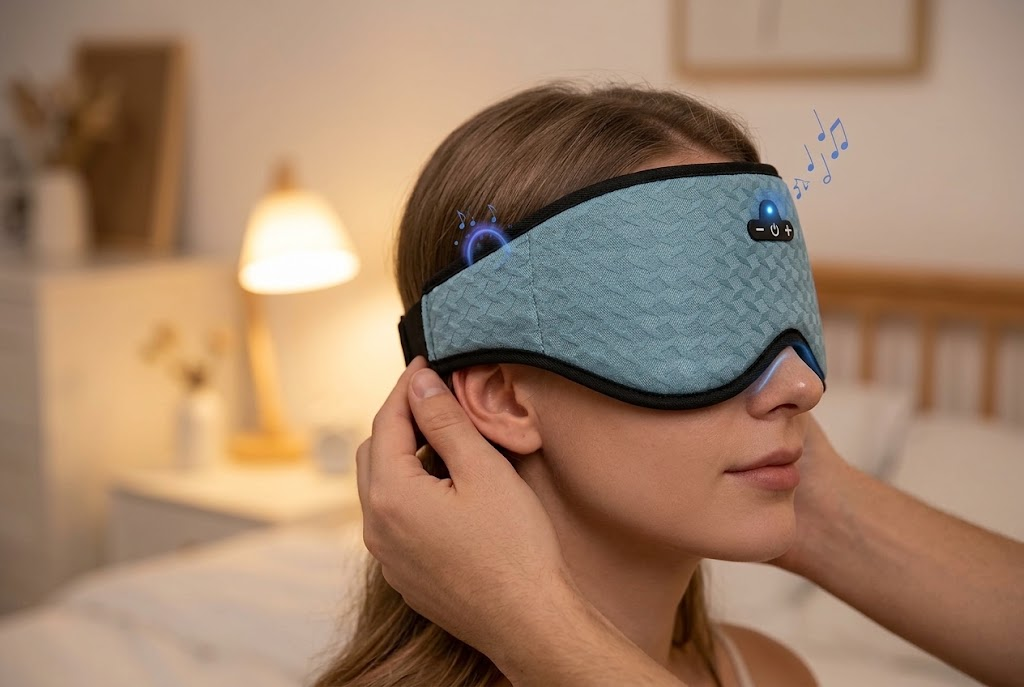
A sleep mask seems simple until you’re staring at dozens of options — silk vs. cotton, flat vs. contoured, basic vs. Bluetooth-enabled. The wrong choice means a mask that slips off, presses on your eyes, or traps heat. This guide breaks down exactly what to look for, backed by the material and construction standards we use as a sleep-device manufacturer, so you can pick (or source) the right one with confidence.
Why Light-Blocking Matters for Sleep Quality
Even small amounts of light exposure at night can suppress melatonin production and disrupt your circadian rhythm. A well-fitted sleep mask creates the darkness your body needs to fall asleep faster and stay in deeper sleep stages — which is why light-blocking performance, not just comfort, should be your first filter when choosing a mask.
7 Factors to Consider When Choosing a Sleep Mask
1. Material
Material determines both comfort and how the mask feels over hours of wear:
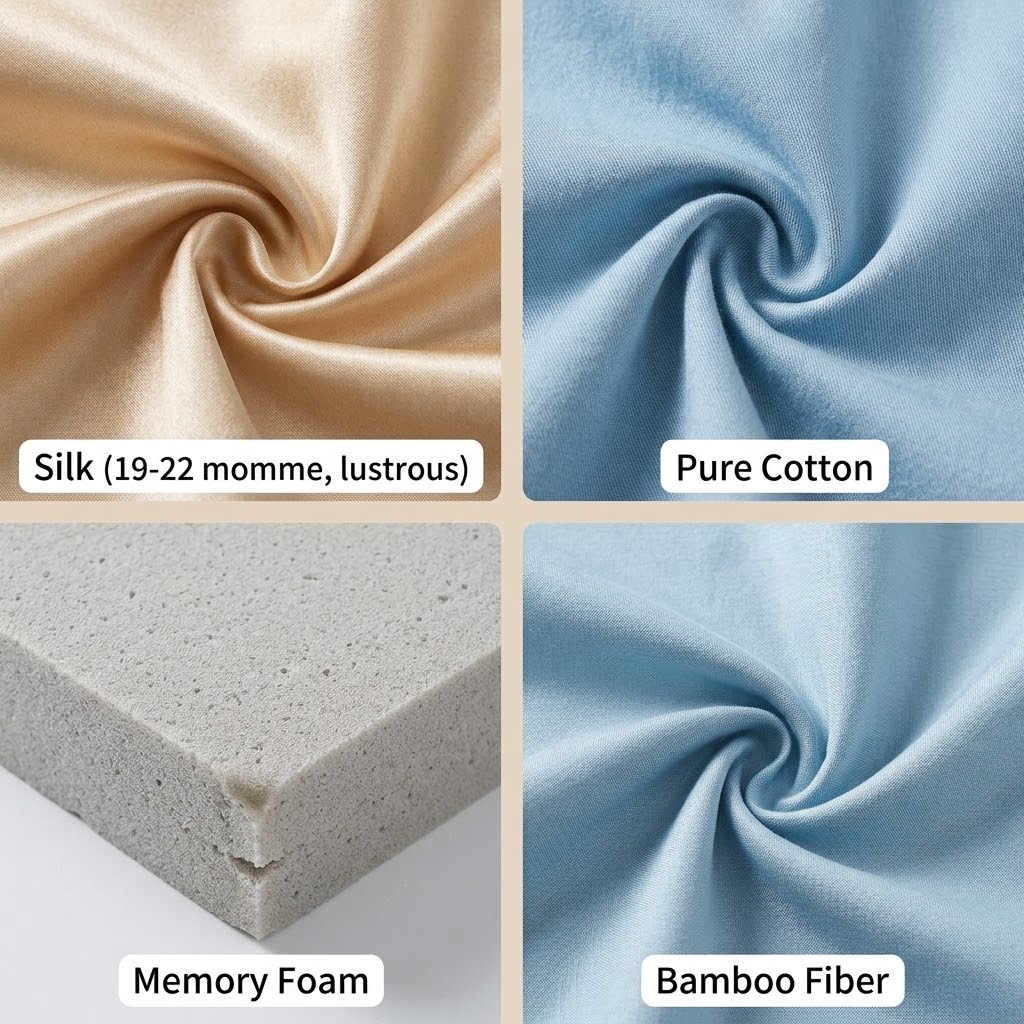
| Material | Feel | Best For | Care |
|---|---|---|---|
| Mulberry Silk (19-22 momme) | Smooth, cool, gentle on skin | Sensitive skin, hot sleepers | Hand wash / delicate cycle |
| Cotton | Soft, breathable, budget-friendly | Everyday use, sensitive eyes | Machine washable |
| Memory Foam | Contoured, firm light seal | Total blackout, side sleepers | Spot clean, removable cover recommended |
| Bamboo Fiber | Breathable, moisture-wicking | Warm climates, night sweats | Machine washable, low heat dry |
2. Light-Blocking Design: Flat vs. Contoured (3D)
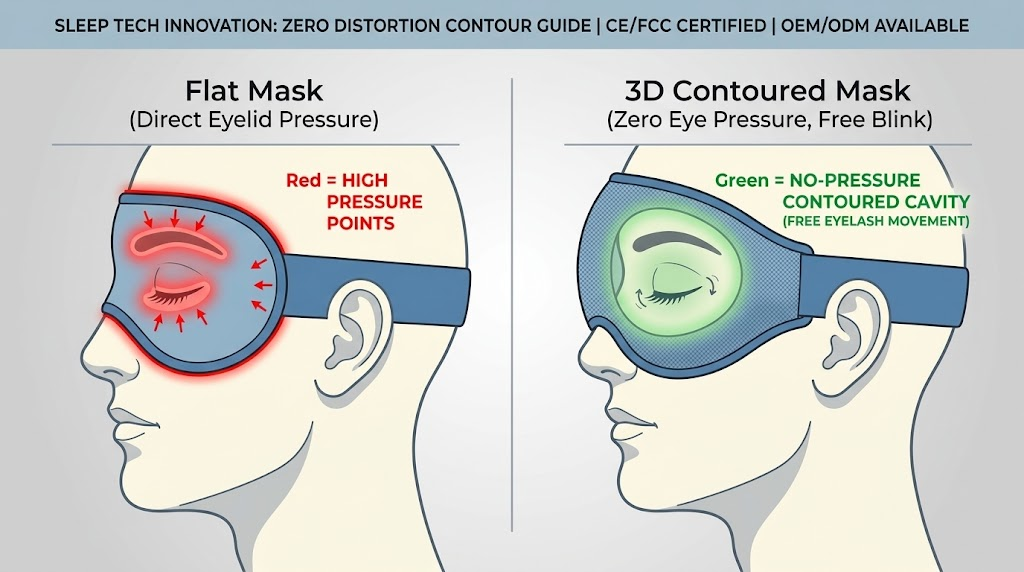
Flat masks are lightweight and affordable but tend to press directly on the eyelids, which can cause pressure or smudge skincare products. Contoured (3D) masks use raised eye cups so your eyelids never touch the fabric, allowing full range of blinking and REM eye movement — a meaningful difference for anyone who wears the mask nightly.
3. Fit and Adjustability
Look for a fully adjustable strap (Velcro or elastic slider) rather than a single fixed elastic band. A mask that’s one-size-fits-all rarely fits all — adjustability prevents gaps at the nose bridge, which is the most common source of light leakage.
4. Shape Around the Nose
A contoured nose cutout prevents light from streaming in underneath the mask — one of the most overlooked design details, especially for side sleepers or anyone sleeping in a room with early morning light.
5. Breathability and Temperature Control
Layered, breathable fabrics prevent heat buildup around the eyes. If you sleep hot or live somewhere warm, bamboo or lightweight cotton blends outperform dense foam designs.
6. Ease of Care
Machine-washable masks (or masks with a removable, washable cover) are easier to keep clean for nightly use — an important factor since sleep masks sit directly against the skin for hours at a time.
7. Added Functionality
Modern sleep masks increasingly combine light-blocking with other sleep aids:
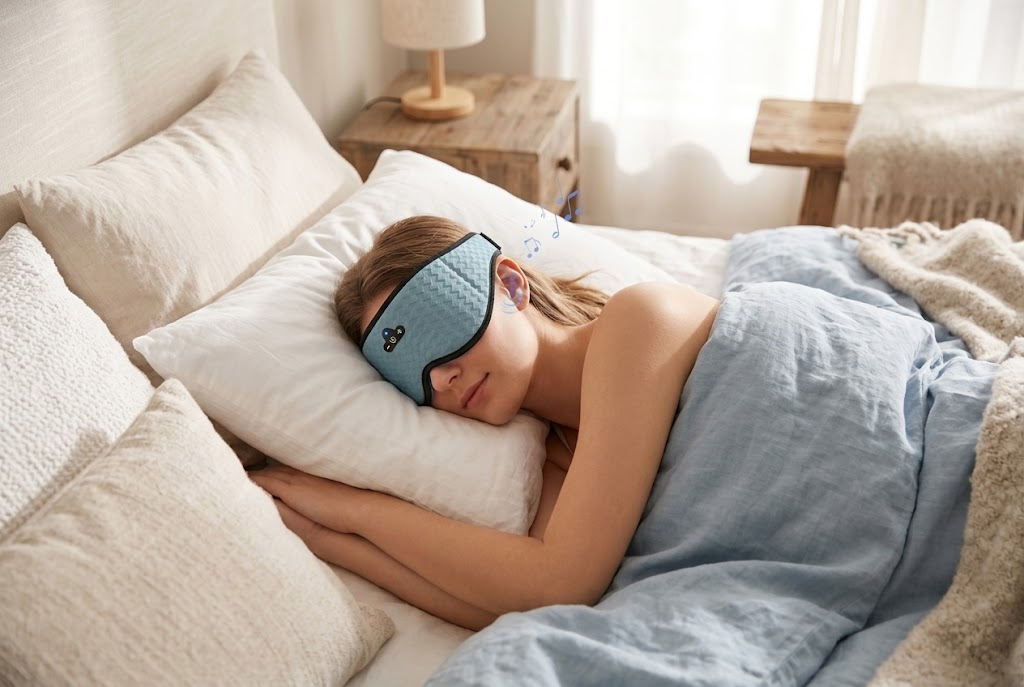
- Built-in Bluetooth speakers for white noise or sleep audio without headphones digging into your ears
- Aromatherapy pockets for calming scents like lavender
- Cooling gel inserts for headache or eye-strain relief
Which Sleep Mask Type Is Right for You?
| You are… | Best Mask Type |
|---|---|
| A side sleeper | 3D contoured mask with a low-profile strap |
| A frequent traveler | Lightweight silk or cotton flat mask |
| Someone who struggles to fall asleep | Bluetooth sleep mask with built-in soundscapes |
| A hot sleeper | Bamboo or breathable cotton blend |
| Sensitive to eye pressure | Contoured memory foam with eye cavity design |
Sourcing Sleep Masks for Retail or Private Label?

If you’re evaluating sleep masks for wholesale or private-label sourcing rather than personal use, material grade, strap hardware, and Bluetooth module quality vary significantly between suppliers. Our Sleep Masks & Sleep Headphones line covers the full range from basic contoured masks to Bluetooth-enabled designs, with OEM/ODM options for bulk buyers. For a deeper look at customizing 3D Bluetooth masks specifically, see our 3D Bluetooth Sleep Mask OEM Customization Guide.
Frequently Asked Questions
Q1: What is the best material for a sleep mask if I have sensitive skin?
Mulberry silk is generally the gentlest option for sensitive skin, as it’s smooth, hypoallergenic, and creates less friction than synthetic fabrics. Cotton is a close, more affordable alternative.
Q2: Do contoured (3D) sleep masks really make a difference?
Yes. Contoured masks keep the fabric off your eyelids entirely, which prevents pressure, allows natural blinking and REM eye movement, and reduces the chance of smudging skincare products or eye makeup.
Q3: How often should I wash my sleep mask?
Since a sleep mask sits directly against your skin for hours nightly, washing it weekly is a good baseline — more often if you wear skincare products to bed or sleep in a warm climate.