
Everyone feels tired sometimes. Signs of sleep deprivation go beyond ordinary tiredness, though. They’re easy to miss until they’ve been building for weeks. This guide covers the early warning signs. It covers the signs that indicate deprivation has become chronic. It also covers how to tell the difference between a rough night and an actual sleep debt worth addressing.
This article covers general information, not medical advice. If sleep problems are severe or persistent, talk to a healthcare provider.
What Counts as Sleep Deprivation?
Sleep deprivation means getting less sleep than your body actually needs, not just less than you’d prefer. Most adults need at least 7 hours a night. Falling short occasionally isn’t a problem. A pattern of falling short night after night is where the real effects start to show up.
Early, Short-Term Signs of Sleep Deprivation
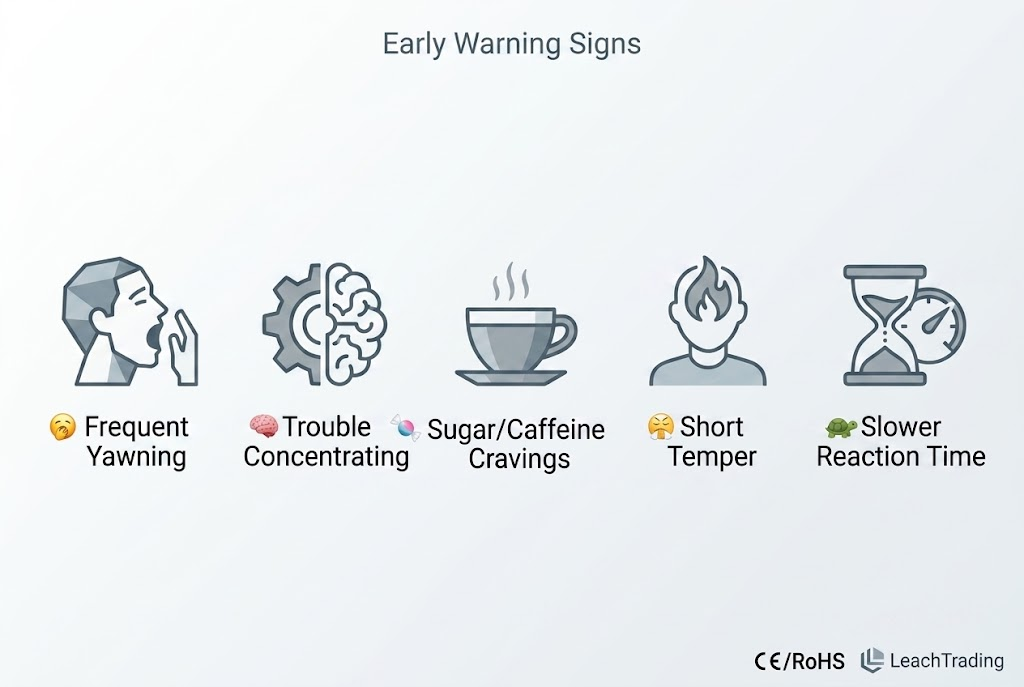
- Frequent yawning, especially in the early afternoon rather than just at bedtime
- Trouble concentrating on tasks that are normally easy, with your mind drifting mid-task
- Craving sugar or caffeine more than usual, since your body reaches for quick energy when sleep is short
- Short temper or low patience over minor frustrations that wouldn’t normally bother you
- Slower reaction time, noticeable in things like driving or catching a dropped object
Signs That Sleep Deprivation Has Become Chronic
Cognitive Signs
Memory lapses become more frequent, particularly with short-term recall like forgetting why you walked into a room. Decision-making feels harder, and small choices start to feel more draining than they should.
Physical Signs
Getting sick more often is a common but overlooked sign, since inadequate sleep affects immune function. Appetite changes are common too, often showing up as increased hunger or specific cravings. This ties back to how sleep loss affects the hormones that regulate hunger and fullness.
Emotional and Mood Signs
Mood swings become more noticeable, and minor setbacks can trigger a bigger emotional reaction than usual. Some people also notice a flatter mood overall, with less enthusiasm for things they’d normally enjoy.
Sleep Deprivation vs. Just Feeling Tired: What’s the Real Difference?
Ordinary tiredness usually resolves after one good night of sleep. Sleep deprivation builds a debt that doesn’t clear that easily. Maybe a single early night doesn’t reset how you feel. Maybe the pattern has been going on for more than a week or two. Either way, that’s a signal worth paying attention to, rather than dismissing as a busy stretch.
How Much Sleep Loss Actually Counts as Deprivation?
Consistently getting less than 7 hours a night is the general threshold most guidance points to for adults. The CDC notes that insufficient sleep is linked to a higher risk of several health issues over time. That includes effects on mood and metabolic health. This is part of why consistency matters more than making up for lost sleep on weekends alone.
Building Better Sleep Habits: What Actually Helps
Addressing sleep deprivation usually comes down to consistent habits rather than a single fix. Our guide to improving sleep quality naturally covers the core habits in depth. A few product-based adjustments can also remove common obstacles:
- A light-blocking sleep mask addresses light disruption directly, especially useful for shift workers or bright bedrooms
- A white noise or sleep aid machine helps mask irregular noise that causes brief, unnoticed awakenings throughout the night
- A wake-up light or sunrise alarm clock supports a consistent wake schedule, which helps regulate your sleep-wake cycle over time
Browse our white noise machine collection or our sunrise alarm clock collection if you’re building out a more complete routine.
When to See a Doctor
Occasional short nights are a normal part of life. Persistent sleep deprivation that doesn’t improve with consistent habits is worth raising with a healthcare provider. This matters especially if it comes with loud snoring, gasping during sleep, or ongoing daytime sleepiness despite spending enough time in bed. These patterns can sometimes point to an underlying sleep disorder that habit changes alone won’t resolve.
Frequently Asked Questions
Can you catch up on lost sleep over the weekend?
Sleeping in can help you feel somewhat better in the short term. It doesn’t fully reverse the effects of a week of insufficient sleep, though. Consistent nightly sleep works better than trying to make up for a deficit all at once.
How many nights of poor sleep before it counts as deprivation?
There’s no strict cutoff. But a pattern lasting more than a week or two, with several nights consistently under 7 hours, is generally where meaningful effects start to show up.
Does sleep deprivation affect physical health or just mental focus?
Both. Sleep loss affects cognitive functions like memory and decision-making. It’s also linked to broader physical effects over time, including immune function and metabolic health.