Blue Light Glasses for Sleep – Red, Orange & Yellow Lens Options for OEM Wholesale
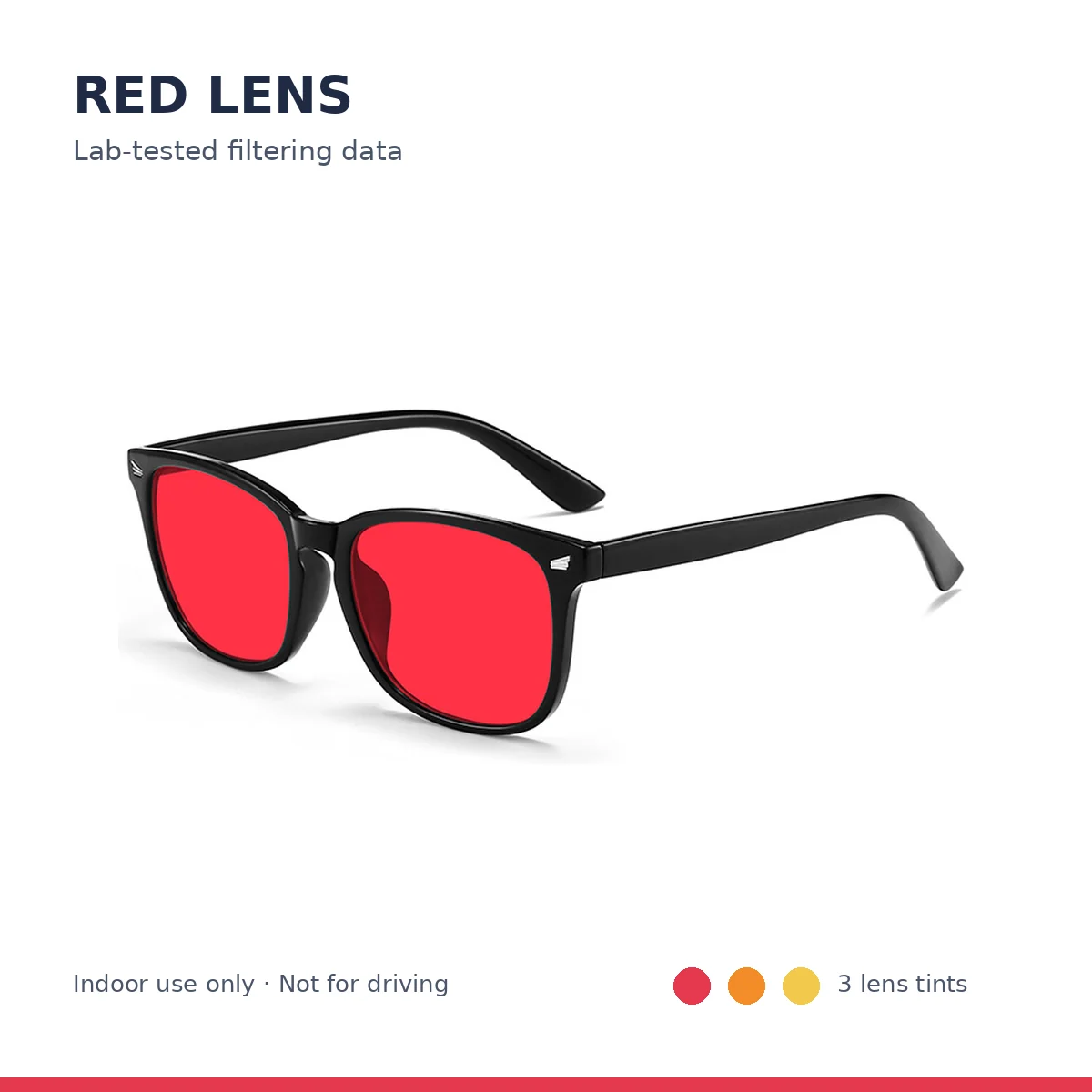
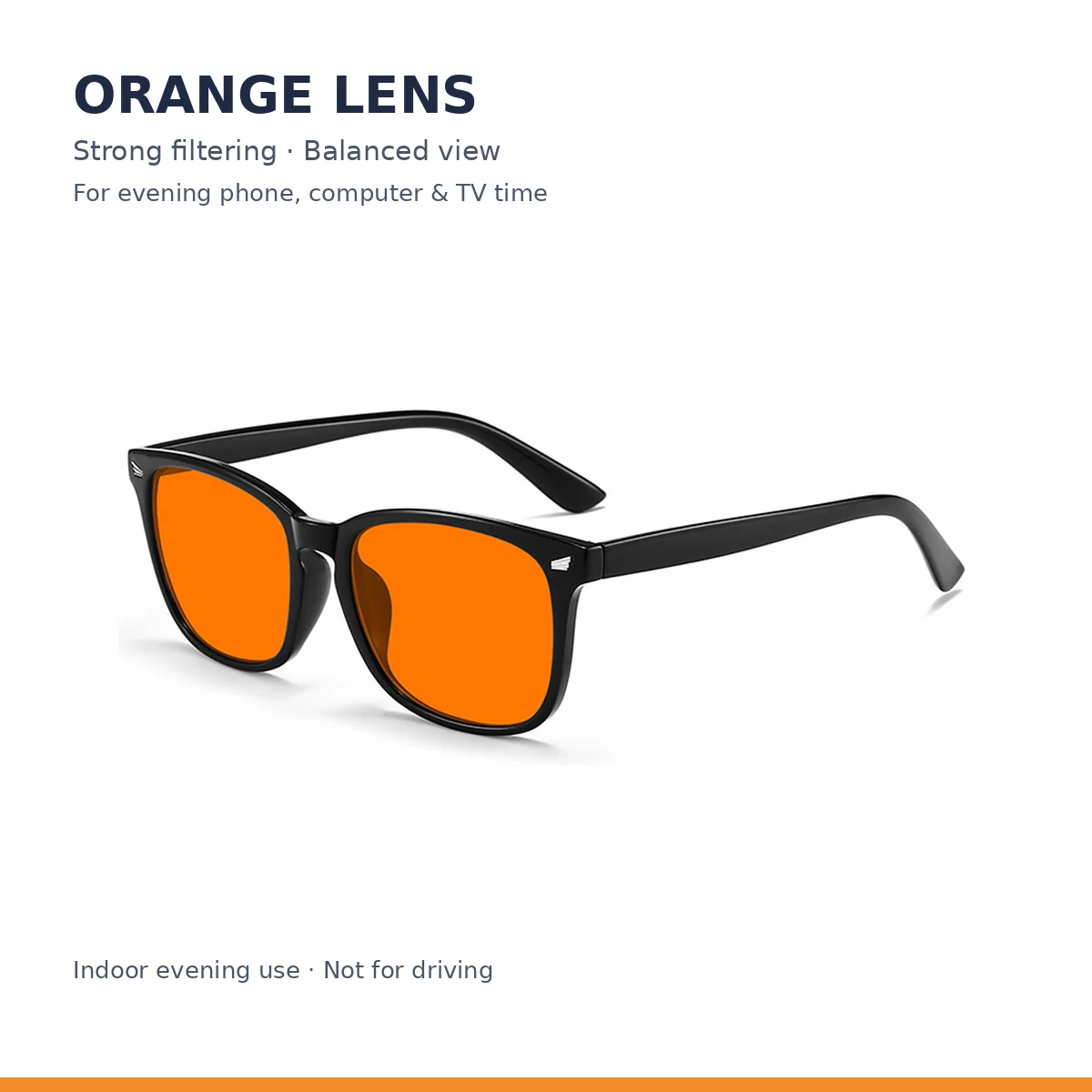
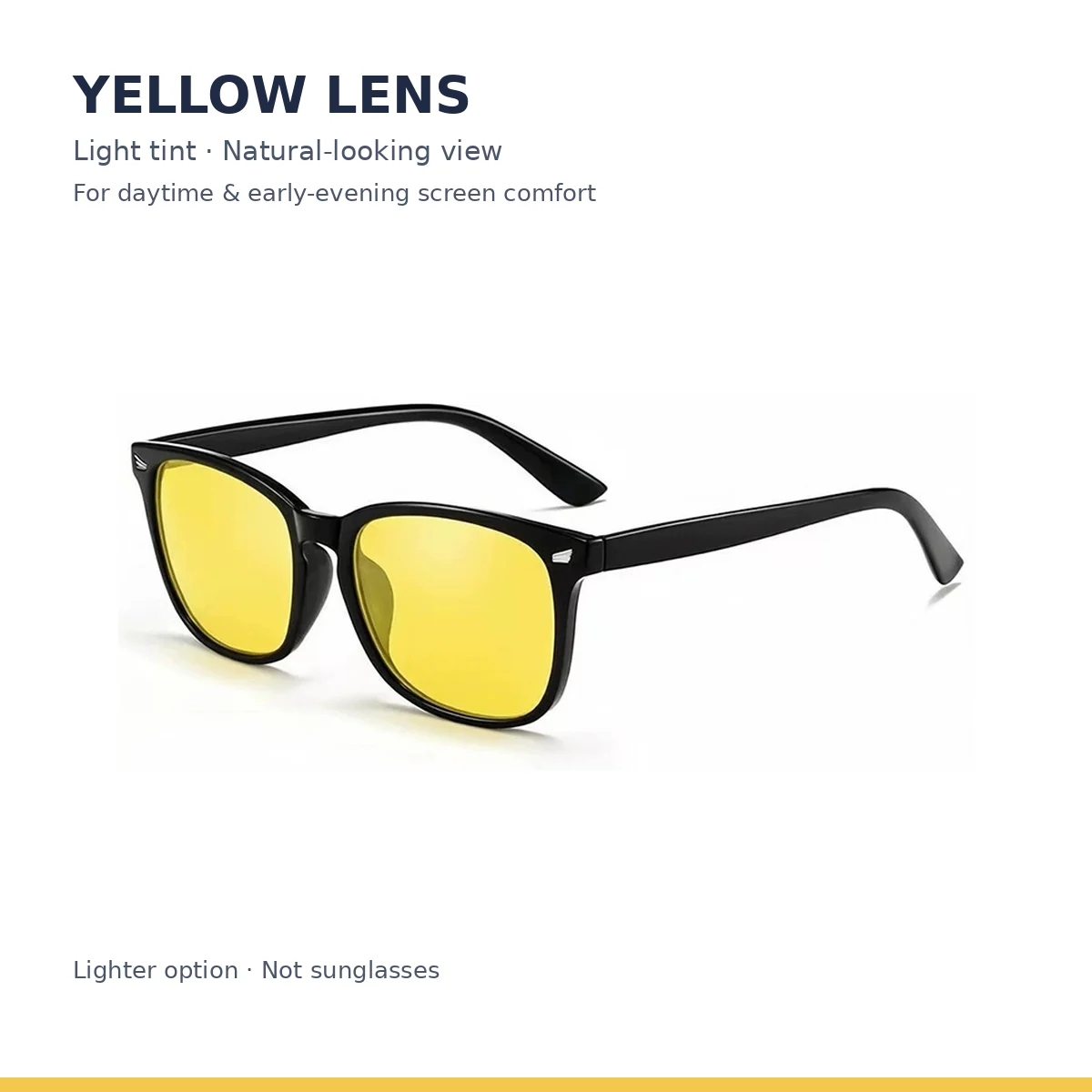
Different lens colors filter different parts of the light spectrum, which is why one pair of blue light glasses for sleep does not suit every situation. This lightweight square-frame model comes in three lens tints — red, orange and yellow — so distributors and private-label brands can offer a clear range on a single frame. The red lens is backed by a spectral test report.
Choose the Right Lens Tint
| Lens Color | Blue & Green Light Filtering | Color Distortion | Best For | Wear Note |
|---|---|---|---|---|
| Red | Highest – lab-tested 0.67% blue light (380–500 nm) transmittance; under 1% from 410 to 560 nm | High – scenes appear strongly red | Final hours before bed, dim-light wind-down | Indoor use only. Not for driving. |
| Orange | High – strong blue light filtering | Medium – warm yellow-orange cast | Evening phone, computer and TV time before bed | Indoor evening use. Not for driving. |
| Yellow | Light – filters part of the blue range | Low – bright, natural-looking view | Daytime and early-evening screen comfort | Lighter option, not the main pre-bed choice |
As a general rule, deeper and warmer tints filter a wider range of light but change color perception more. Lighter tints keep colors closer to natural but filter less.
Red Lens Test Data
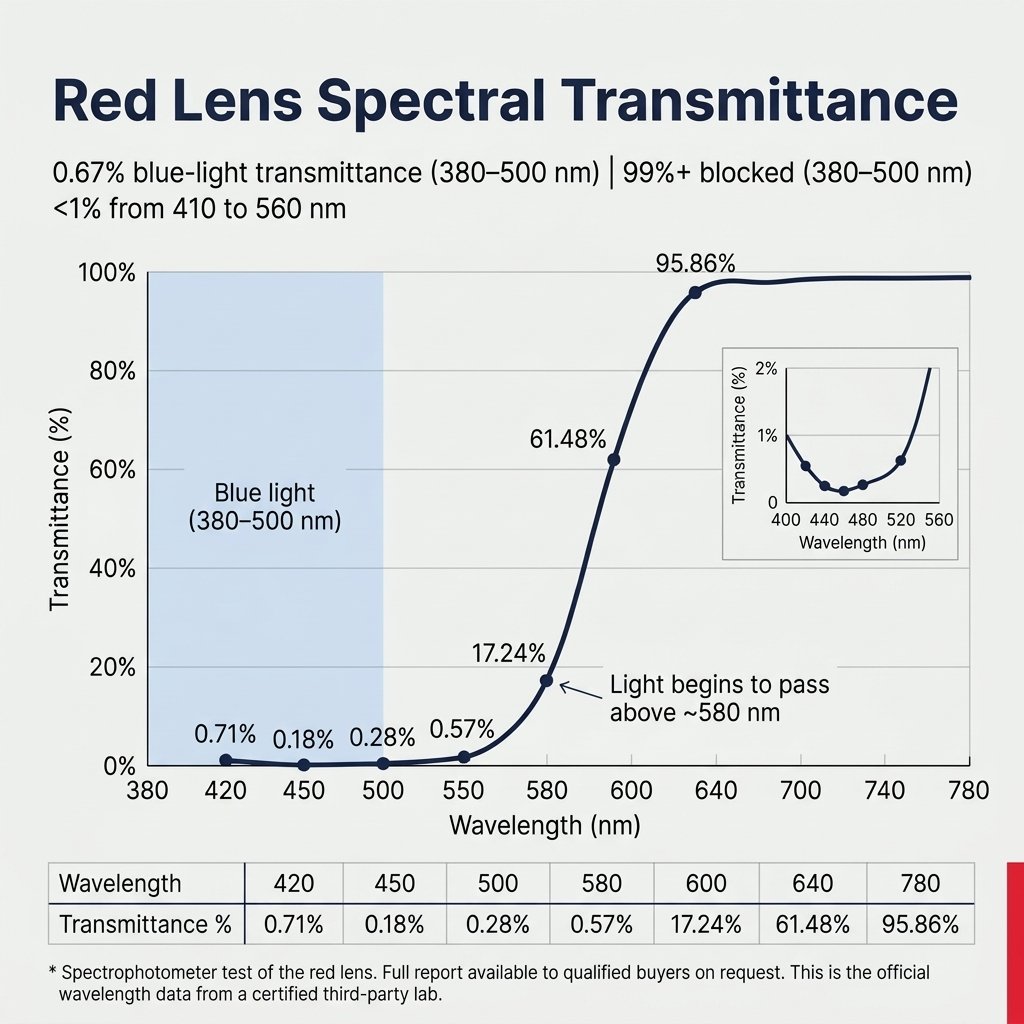
The red lens has been measured with a spectrophotometer. Key results:
| Item | Result |
|---|---|
| Solar blue-light transmittance (380–500 nm) | 0.67% |
| Luminous (visible light) transmittance | 18.91% |
| Transmittance from 410 to 560 nm | Below 1% at every measured point |
| Where light begins to pass | Above approx. 580 nm |
| Wavelength (nm) | 420 | 450 | 500 | 550 | 580 | 600 | 640 |
|---|---|---|---|---|---|---|---|
| Transmittance (%) | 0.71 | 0.18 | 0.28 | 0.57 | 17.24 | 61.48 | 95.86 |
The full test report is available to qualified buyers on request. Orange and yellow lens data: [add when tested].
Safety & Usage Notes
- Not for driving. Red and orange tinted lenses change color perception, and the red lens reduces recognition of green and blue signal lights.
- Not sunglasses and not intended as UV protection.
- Non-prescription consumer glasses, not a medical device.
Technical Specifications
| Specification | Detail |
|---|---|
| Model No. | 19220 |
| Product Type | Anti-blue-light glasses for sleep and evening use |
| Frame Material | PC |
| Lens Material | PC |
| Lens Colors | Red / Orange / Yellow |
| Frame Style | Square full-rim, accent rivet detail |
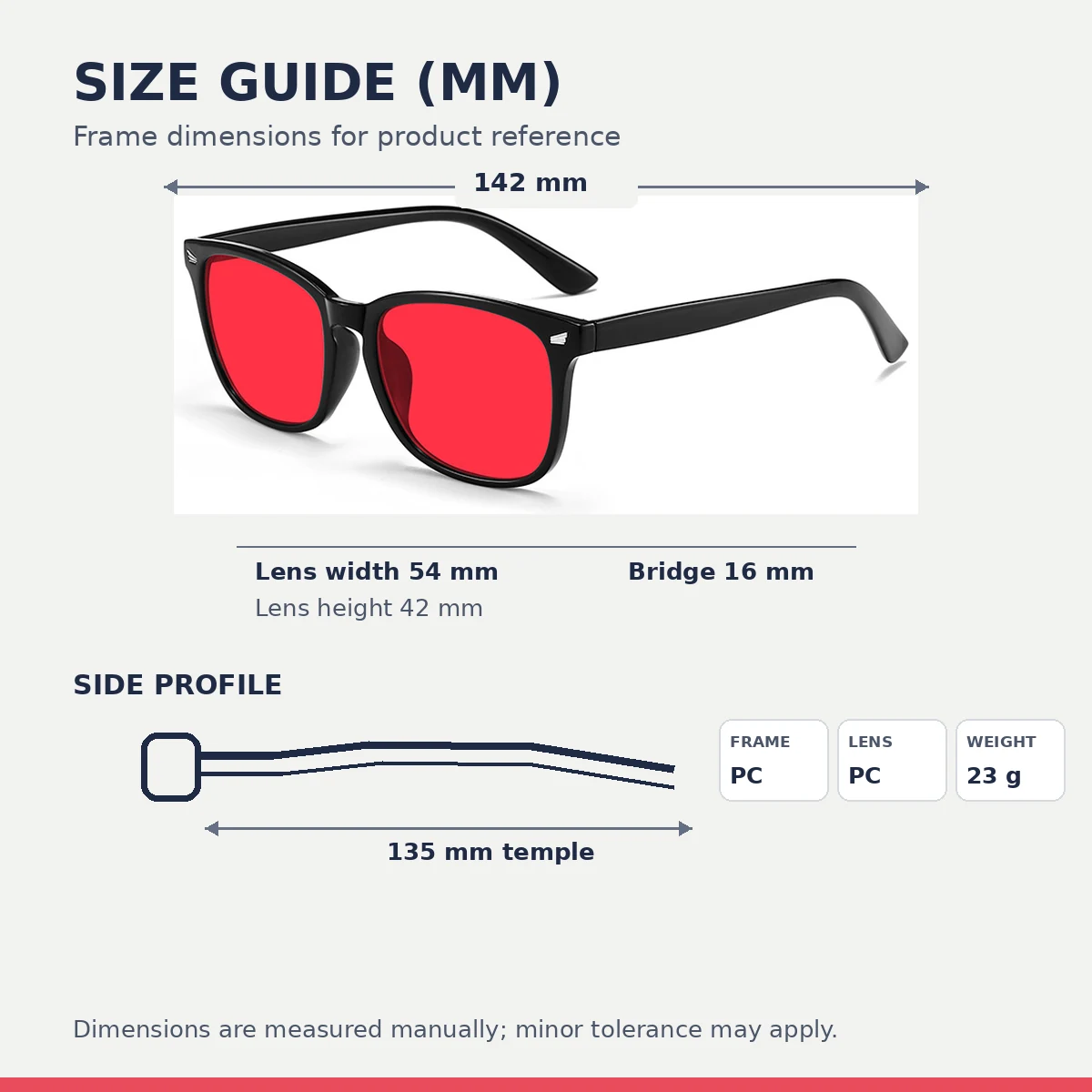
| Lens Width | 54 mm |
| Lens Height | 42 mm |
| Bridge Width | 16 mm |
| Frame Width | 142 mm |
| Temple Length | 135 mm |
| Weight | 23 g |
| Standard Frame Color | Glossy black |
| Lens Type | Non-prescription (plano) |
| Note | Dimensions are measured manually; minor tolerance may apply. |
OEM/ODM & Wholesale Program
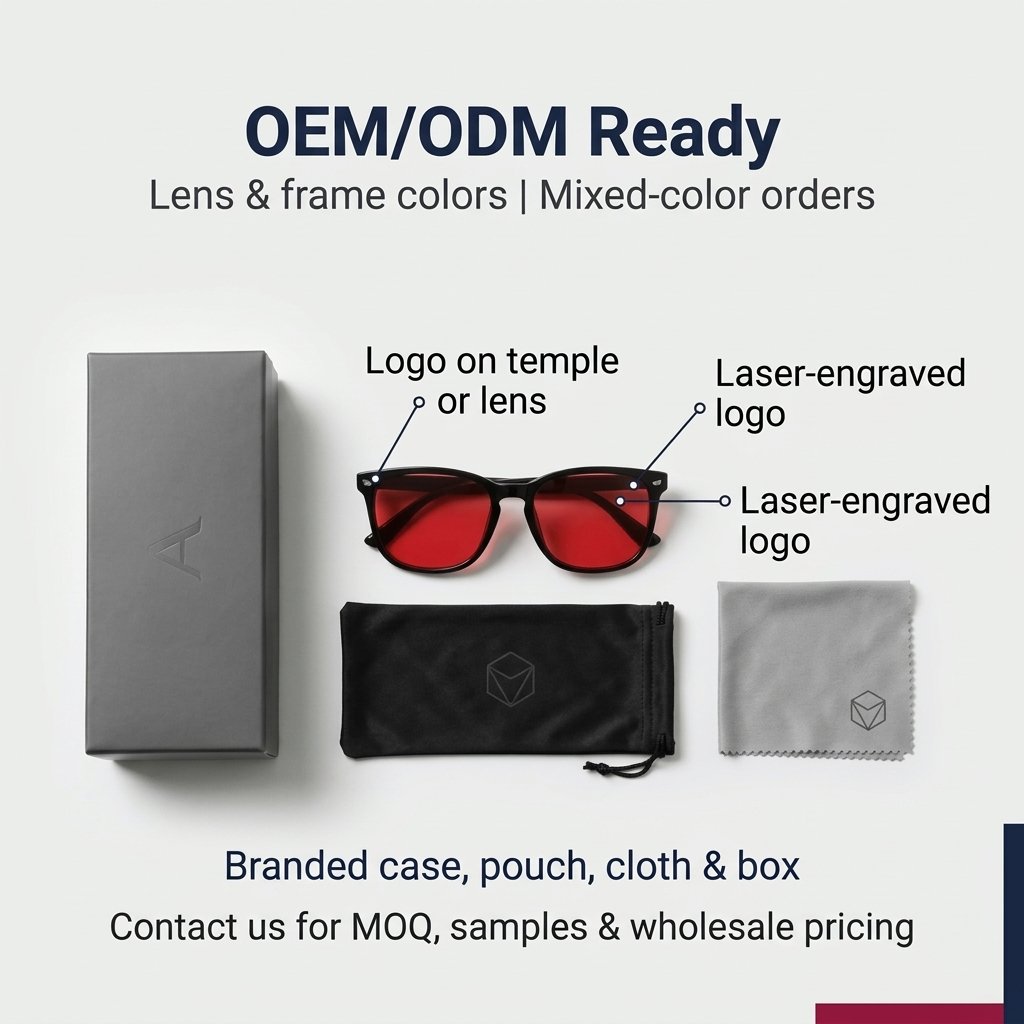
Customization Options
- Custom logo on temple or lens (printing / laser engraving)
- Lens color selection and mixed-color orders
- Custom frame color
- Branded case, pouch, cleaning cloth and color box packaging
How Buyers Typically Build the Range
- Orange as the hero SKU for general sleep-wellness retail
- Red as the premium “maximum filtering” option, supported by test data
- Yellow as a lower-cost entry option for daytime screen use
MOQ, Samples & Lead Time
Please contact our sales team for current MOQ, sample availability and production lead time. [Add your MOQ and lead time here]
Build a Bedtime-Routine Assortment
Blue light glasses sell well alongside other sleep products. Pair them with our sleep masks and sleep headphones, wake-up lights and sunrise alarm clocks, or light therapy lamps to offer a complete evening-to-morning range.
Frequently Asked Questions
Q1: Which lens color is best for sleep?
Red and orange lenses filter more blue light than yellow and are the usual choices for evening wear before bed. Red filters the widest range but shifts colors the most, while orange offers strong filtering with a more balanced view. Yellow is a lighter option for daytime and early-evening screen use.
Q2: How much blue light does the red lens block?
In our spectral test, the red lens showed 0.67% solar blue-light transmittance (380–500 nm) and under 1% transmittance at every measured point from 410 to 560 nm. The test report is available to qualified buyers on request.
Q3: Can I wear these glasses while driving?
No. Red and orange lenses change color perception, and the red lens reduces recognition of green and blue signal lights. These glasses are for indoor use and are not sunglasses.
Q4: Can lens color, logo and packaging be customized?
Yes. We support OEM/ODM orders including custom logo, lens color, frame color, mixed-color orders and packaging. Contact our team for MOQ and sample details.
Q5: Are these glasses a medical product?
No. They are consumer wellness eyewear designed to reduce blue light from screens and indoor lighting in the evening. They are not a medical device or a treatment for any sleep or health condition.